No Tag, No Problem: How Gen Z Turned Fan-Made Drops Into a Shadow Economy
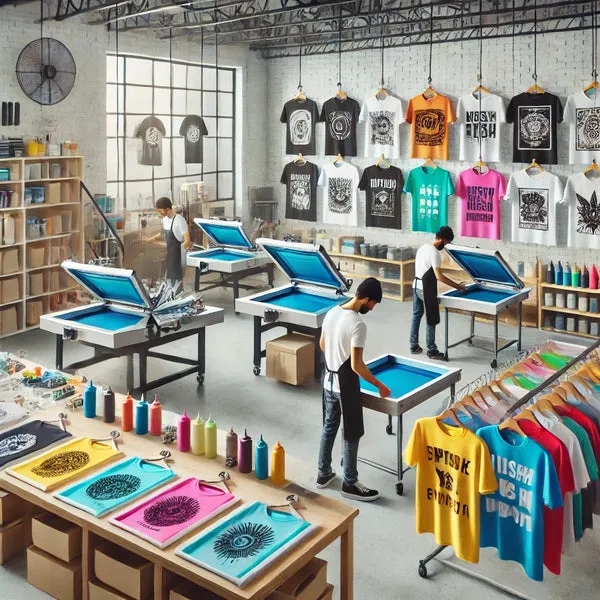
Photo: DIY screen printed t-shirts fan art underground market, via cdn.shopify.com
There's a hoodie circulating on Depop right now. Hand-screened, slightly imperfect registration on the graphic, priced at $65. It features a beloved indie artist's face rendered in a grainy, photocopied aesthetic. The artist never made it. No label approved it. No licensing deal exists. And it sold in under four minutes.
Welcome to the bootleg economy — a sprawling, semi-invisible market where fan art, unauthorized merch, DIY collectibles, and hand-pressed vinyl bootlegs function less like consumer goods and more like cultural currency. Gen Z didn't invent the bootleg hustle, but they've turbocharged it into something that feels genuinely new.
The Hustle Has Always Been There
Boot culture has roots stretching back decades — think concert parking lot vendors slinging unlicensed band tees in the '80s, or the Canal Street knockoff scene that defined a certain flavor of New York cool. What's shifted isn't the impulse but the infrastructure. Private Discord servers, Depop storefronts, Instagram close-friends lists, and even low-key TikTok Shop accounts have replaced the folding table and the trunk of a car.
The result is a parallel economy that moves fast, values scarcity, and operates almost entirely on trust and community reputation. You don't find the good stuff through Google. You get vouched in.
"It's not about being cheap or ripping someone off," says Maya, a 22-year-old in Chicago who runs a small operation making hand-painted denim jackets featuring imagery from her favorite underground rap artists. "The artists I make stuff for literally don't have merch. Or if they do, it's a Gildan tee from their label that costs $45 and looks terrible. I'm filling a gap."
That framing — filling a gap, not stealing a slice — is almost universal among the makers operating in this space.
Depop as the New Flea Market
Depop has become the most visible corner of this ecosystem, functioning somewhere between an art fair and a black market. Search any mid-level artist's name alongside "bootleg" or "fan made" and you'll surface dozens of listings: embroidered beanies, risograph-printed zines, hand-dyed totes, ceramic pins. The aesthetic is deliberately lo-fi. The imperfection is the point.
Platform policies technically prohibit unauthorized use of copyrighted likenesses, and sellers occasionally get listings pulled. But enforcement is inconsistent, and most makers have learned to navigate it — using abstract references, limiting quantities, or moving their most heat-adjacent drops to private channels where Depop's moderation can't reach.
The private Discord drop is where things get really interesting. Servers dedicated to specific fandoms or music subcultures will host what amounts to a flash sale — a 48-hour window where a maker drops ten hand-numbered prints or a run of twenty shirts. Members get pinged. Items move. Screenshots of sold-out notifications circulate like trophies.
Authenticity Over Authenticity Certificates
Here's the thing that makes this economy genuinely fascinating: it operates on a completely different value system than the official merch industrial complex. Corporate merchandise is authenticated by trademark. Underground drops are authenticated by provenance — who made it, how it was made, whether the maker is a real fan, whether the item has a story.
A $200 "official" capsule collection from a major label is considered less legit in these circles than a $40 hand-screened tee made by someone who's been to every local show and documents their process on Instagram Stories. The community has built its own certification system, and it runs entirely on cultural credibility.
"I've bought fake Supreme and I've bought bootleg Mitski stuff," says Jordan, a 24-year-old in Brooklyn. "Those are completely different things. One is trying to deceive you about what it is. The other is someone expressing love for something through craft. I know exactly what I'm buying."
That distinction matters. The bootleg economy Gen Z has built isn't primarily about deception — it's about a different relationship to ownership, authorship, and what it means to support something you love.
The Gray Zone Gets Complicated
None of this is without tension. Some artists have spoken out against unauthorized merch, arguing that it cannibalizes their revenue stream at a moment when streaming pays fractions of pennies. Others have quietly embraced it — or even collaborated with fan-makers, blurring the line between official and unofficial in deliberately provocative ways.
A few artists have gone further, explicitly blessing the bootleg ecosystem around their work. Smaller indie acts with cult followings sometimes repost fan-made merch on their own stories, functioning as free advertising and community building simultaneously. The relationship between creator and fan-manufacturer is genuinely complicated, and it doesn't map cleanly onto old frameworks of copyright and commerce.
What's undeniable is that the underground market has become a meaningful part of how certain artists' cultural footprints are maintained and expanded. The bootleg tee at the house show is often someone's first physical artifact of a fandom that will last years.
Anti-Corporate Isn't Just Aesthetic
Zooming out, the bootleg economy is inseparable from a broader Gen Z skepticism about corporate mediation of culture. Official merch is, in many cases, produced by the same fast-fashion supply chains as everything else — designed by committee, manufactured overseas, priced to maximize label margin. Buying it doesn't feel like connecting with an artist. It feels like buying a product.
The DIY drop, by contrast, is made by a real person who cares. It exists in limited quantities. It carries the fingerprints of its maker. It's part of a community that has its own rituals, its own language, its own economy of attention and reputation.
That's not nothing. In an era when everything is infinitely reproducible and corporate branding colonizes every aesthetic the moment it gets interesting, the hand-made bootleg is an act of resistance. Imperfect, unauthorized, and absolutely not for sale at Hot Topic.
The signal it sends is pretty clear: the underground makes its own gear.