Dead Air Isn't Dead: The Pirate Radio Operators Reclaiming the Airwaves
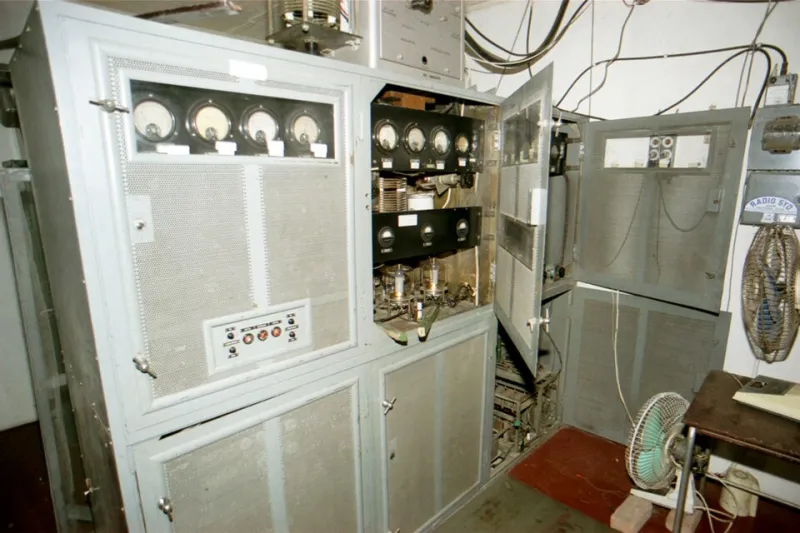
Photo: Henryk Kotowski (Kotoviski), CC BY 2.5, via Wikimedia Commons
Let's be honest about what commercial radio has become. In most American cities, the FM dial is a graveyard of syndicated content, algorithmically optimized playlists, and morning shows designed by focus group. Clear Channel — now rebranded iHeartMedia, as if the name change fixed anything — controls hundreds of stations. The homogenization is so complete that you can drive from Memphis to Minneapolis and hear the same three songs in the same rotation.
So it makes a certain kind of sense that people are picking up transmitters.
Pirate radio — unlicensed, low-power, operating in the legal gray zones and outright illegal spaces of the FM spectrum — is having a moment. Not a mainstream moment. Not a TED Talk moment. A real, underground, community-driven resurgence that's happening in basements, community centers, car trunks, and rooftops across the country. And it's worth paying attention to.
The FCC's Blind Spots Are Someone's Opportunity
Let's talk about what's technically happening here, because the legal landscape is genuinely complicated. The FCC regulates the airwaves in the US, and broadcasting without a license is, technically, a federal violation. The agency has enforcement powers and occasionally exercises them — particularly against operations that interfere with licensed broadcasters or aviation communications.
But the FCC is also understaffed, geographically spread thin, and largely reactive. A 100-milliwatt transmitter broadcasting to a two-mile radius in a dense urban neighborhood is not their top priority. Most pirate operations know this and operate accordingly — keeping power low, staying mobile when necessary, and building enough community goodwill that their neighbors aren't the ones making the call.
Then there's the legal gray area of Low Power FM (LPFM), a licensing category the FCC created in 2000 and expanded in 2012. LPFM stations broadcast at up to 100 watts, serve hyperlocal communities, and are supposed to be non-commercial. In theory, it's a legitimate path for community radio. In practice, the application windows are infrequent, the process is bureaucratic, and many communities — particularly in urban areas where the spectrum is most crowded — can't get a frequency at all.
The result is a spectrum of operators: some technically licensed, some operating in deliberate legal gray zones, some fully pirate and proud of it.
Who's Actually Behind the Mic
The portrait of a pirate radio operator you're probably imagining — some anarchist hobbyist, maybe a little paranoid, broadcasting from a ham radio setup — is real but incomplete. The current resurgence is more diverse than that, both in terms of who's running stations and why.
In South Florida, where the pirate radio tradition is deeply embedded in Caribbean immigrant communities, unlicensed stations have long served as the primary Spanish and Creole-language media for neighborhoods that commercial broadcasters have historically ignored. These aren't hobbyists. They're community infrastructure.
In cities like Chicago, Detroit, and Oakland, a new generation of operators is running what they describe as community broadcast collectives — groups of DJs, musicians, organizers, and journalists who pool resources, share equipment, and rotate programming. The music is experimental: footwork, ambient, noise, local hip-hop that's never going to get mainstream play. But there's also talk radio — local politics, tenant organizing updates, mutual aid coordination. The format is radio, but the function is something closer to a community newsletter.
"We're not trying to be WBEZ," says one operator in Chicago who asked to be identified only as Dex. "We're trying to be the thing WBEZ isn't. Hyper-local. Opinionated. Playing music from people who live three blocks from the transmitter."
The Sound Commercial Radio Won't Touch
This is where pirate radio gets genuinely exciting as a cultural proposition. Without advertisers, without format consultants, without the constant anxiety about ratings and reach, unlicensed operators can play literally anything. And they do.
Experimental electronic music that exists in tiny runs on Bandcamp. Noise artists who've never performed outside a warehouse. Local punk bands who recorded their EP themselves and pressed fifty copies. Oral history projects from neighborhood elders. Unedited field recordings. Long-form interviews with local organizers that run ninety minutes without a break.
This is the content that streaming platforms technically could host but don't surface, because their discovery systems are built around scale and engagement metrics that underground art is structurally incapable of gaming. Radio — even pirate radio, maybe especially pirate radio — bypasses all of that. You tune in, you hear what's on, and you have the experience of encountering something you didn't know to look for.
That serendipity is genuinely rare now. It's one of the things the algorithm killed. Pirate radio is one of the few places it still lives.
Rebellion as Medium
There's something important about the fact that these operators chose radio specifically — an old, supposedly dying medium — as their vehicle. They could be podcasting. They could be streaming on Twitch. Many of them do both, sometimes rebroadcasting their FM signal online simultaneously.
But the FM broadcast carries a specific meaning. It's public in a way that a podcast isn't. It reaches people who aren't subscribers, who didn't opt in, who might be driving home from work and just spin the dial. That accidental audience is part of the point.
Radio also has a history. Numbers stations. Offshore pirates like Radio Caroline. The civil rights movement's relationship with Black radio in the South. Free Radio Berkeley. The medium has always been a site of political contestation, and operators today are consciously invoking that history.
"The FCC was created to manage the spectrum in the public interest," Dex says. "If they're not doing that — if the public interest is being served by a Clear Channel station playing the same forty songs — then someone has to."
That argument isn't going to hold up in federal court. But as a moral claim about who the airwaves are for, it's hard to dismiss.
Tune In While You Can
Pirate radio operations come and go. Transmitters fail. Operators move. Occasionally the FCC shows up. But the impulse that creates them doesn't disappear — it relocates, reconstitutes, finds a new frequency.
The underground always finds a signal. That's kind of the whole point.