Servers, Zines, and No Permission Required: Discord Is the New Underground Press

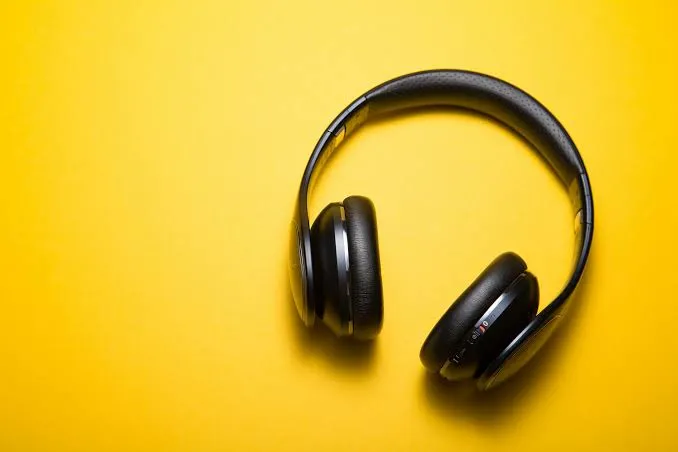
Photo: Brian Twitty, CC BY 4.0, via Wikimedia Commons
Let me tell you about a Discord server I stumbled into about eight months ago. It had maybe 600 members. There was a channel dedicated entirely to collaborative short fiction written in real time, another where members posted hand-drawn illustration work for community feedback, and a music production channel where people were sharing unfinished beats at 2 a.m. and getting genuinely thoughtful critiques by morning. There was no brand behind it. No monetization strategy. No editorial board. Just a few hundred people who cared intensely about the same weird, specific things, building something together in a space most of the internet didn't know existed.
If that sounds familiar, it should. It sounds like a zine.
What Zines Actually Were (And Why They Mattered)
For those who didn't grow up haunting the back shelves of punk record shops or college art buildings in the '80s and '90s, a quick primer: zines were self-published, usually photocopied, often staple-bound little publications that existed entirely outside commercial media. Riot grrrl zines. Science fiction fanzines. Skateboarding zines. Political zines. Music criticism zines that were sharper and stranger than anything appearing in Rolling Stone.
They weren't just content. They were community infrastructure. A zine told you that someone, somewhere, cared about the same obscure thing you cared about. It created a network of like-minded weirdos who mailed each other photocopies and traded ideas across geographic distances that would have otherwise made connection impossible.
The internet was supposed to make zines obsolete. Blogs kind of did, for a while. Then social media platforms promised to democratize publishing even further. And they did — but they also homogenized it. The algorithm flattened everything toward engagement metrics. The feed became a performance space. The intimacy that made zines feel like something got squeezed out in the chase for reach and virality.
Discord, weirdly, brought a lot of it back.
The Architecture of Intimacy
Here's what makes Discord structurally different from every other major social platform: it is not, at its core, designed for broadcasting. It's designed for rooms. Channels within servers function more like the back booth at a diner than a stage — they're spaces where a finite number of people can actually hear each other, respond to each other, and build a shared vocabulary over time.
That architecture matters enormously for creative communities. When you post experimental writing or half-finished artwork or a genre-bending music experiment into a Discord channel, you're not throwing it into the void of a public feed hoping the algorithm surfaces it to strangers. You're showing it to a specific group of people who opted into this space because they already care about what's being made here. The feedback loop is completely different. The stakes feel different. The work tends to get weirder and more ambitious because of it.
This is the zine energy. The feeling that you're making something for a real audience of actual humans, not for a platform's engagement statistics.
Collaborative Creation Without a Publisher in Sight
What's genuinely striking about the most vital Discord creative communities is how sophisticated their internal publishing ecosystems have become. I've seen servers with dedicated editorial channels where members submit and workshop written pieces before a community vote determines what gets compiled into a monthly PDF zine — one that gets distributed through the server and traded across connected communities. I've seen music-focused servers where members collectively produce compilation albums, handle their own artwork and layout, and release them through Bandcamp with zero label involvement.
The decentralization isn't incidental — it's the whole point. These communities are acutely aware that they're building outside the traditional infrastructure, and that awareness shapes what they make. When there's no publisher to greenlight your project, no label to approve your sound, no platform algorithm to optimize for, the creative choices become genuinely free in a way that's hard to manufacture inside commercial frameworks.
There's also a kind of institutional memory that develops inside long-running servers that feels genuinely rare online right now. Unlike a Twitter thread or an Instagram post that disappears into the archive, Discord channels accumulate history. Inside jokes, evolving aesthetic philosophies, ongoing collaborations, recurring characters in community fiction — these build up over months and years into something that actually resembles a culture, not just a content stream.
The Gatekeeping That Isn't There
One of the things that killed a lot of the original zine energy when it migrated online was the reintroduction of gatekeeping in new forms. Follower counts became proxies for credibility. Verification badges created hierarchies. The platforms themselves made editorial decisions through algorithmic suppression — deciding, without transparency, whose work got seen and whose didn't.
Discord servers aren't free of power dynamics — server admins exist, mod teams make calls, and some communities absolutely develop their own internal hierarchies. But the barriers to entry for making something and finding an audience for it are genuinely lower. A new member with no follower count and no prior platform presence can drop a piece of writing or a beat or a piece of artwork into the right channel and have it taken seriously on its own terms within hours.
For a lot of young artists who've spent years trying to break through on Instagram or TikTok and found the game rigged toward those who already have reach, that's not a small thing. That's a completely different model of what creative community can look like.
The Fringe Has Always Found a Way
The through-line from hand-stapled zines to Discord servers isn't a straight one — there were blogs, Tumblr communities, forums, and a dozen other experimental forms in between. But the impulse has been consistent: when mainstream channels fail to make space for the weird, the niche, the genuinely experimental, creative communities build their own channels.
Discord isn't perfect. It has its own corporate ownership and its own potential to shift the rules in ways that hurt the communities living inside it. Nothing underground stays untouched forever.
But right now, in 2024, some of the most alive and interesting creative work being produced in America is happening inside servers most people will never find. It's being made by people who stopped waiting for permission and started building rooms instead.
That's the signal worth tuning into. The fringe always finds its frequency.