Spectrum Scavengers: The DIY Engineers Turning Ghost Frequencies Into Living Sound
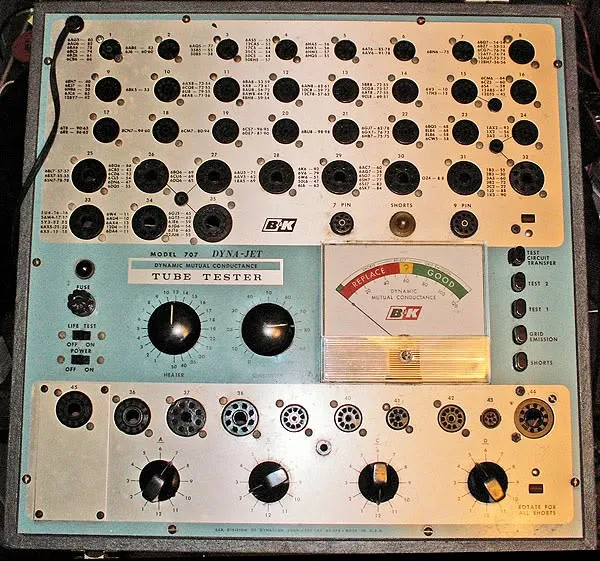
Photo: radio frequency spectrum analyzer vintage equipment close up, via i.pinimg.com
Turn an old analog radio dial slowly enough and you'll hear it — that gap between stations where the signal goes hollow. Most people nudge past it. A growing crew of DIY audio producers have decided to move in.
Call them spectrum scavengers. Call them frequency archaeologists. They'd probably shrug at either label and go back to soldering. What they're doing is quieter than pirate radio, weirder than field recording, and technically more complicated than most bedroom producers want to deal with. They're hunting the dead bandwidth — those orphaned, rarely-used, or functionally abandoned slices of the radio spectrum — and treating them like raw material for experimental sound art.
And it's genuinely one of the stranger, more fascinating things happening in underground audio right now.
What Even Is Dead Bandwidth?
The radio spectrum is regulated in the US by the FCC, which assigns frequency ranges to specific uses — commercial FM, AM, emergency services, aviation, weather, military, and dozens of other categories. In theory, it's all spoken for. In practice, a lot of it sits quiet.
Licensed frequencies go unused when stations shut down and don't immediately transfer their licenses. Industrial bands get allocated for equipment that's been obsolete for decades. Certain shortwave ranges that once carried international broadcasts now carry almost nothing. Even within active bands, there are gaps — narrow corridors of spectrum that regulation carved out and nobody ever fully occupied.
That's the terrain these producers are mapping.
"People think of the spectrum like it's a highway that's always packed," says Marcus, a 24-year-old audio engineer based in Detroit who goes by the handle Nullfield online. "But there are whole stretches that are basically empty parking lots. And empty parking lots are interesting if you know how to listen."
Listening, in this context, means running software-defined radio setups — SDR receivers that let you tune across wide frequency ranges using a laptop and a cheap USB dongle — alongside more specialized gear like crystal-controlled scanners and modified consumer radios. The hardware barrier is lower than it's ever been. A basic SDR setup costs under fifty bucks. The knowledge to use it meaningfully takes longer to acquire, and that's exactly the kind of friction this community finds appealing.
The Sound of Nothing (Which Is Never Actually Nothing)
Here's what separates these producers from hobbyist scanner listeners: they're not just monitoring. They're recording, processing, and composing with what they find.
Atmospheric noise. Intermodulation artifacts — the ghost signals created when two frequencies interact. Electrical interference patterns from power infrastructure. The subtle hiss of cosmic background radiation that bleeds into certain shortwave ranges. Even the structured silence of a frequency that should have something on it but doesn't — that absence has a texture.
"There's this phenomenon called whistlers," explains Priya, a 22-year-old based in Portland who produces ambient and drone music under a name she'd rather not publish. "They're these descending tonal sweeps caused by lightning-generated electromagnetic waves traveling along the Earth's magnetic field lines. You can capture them in the very low frequency range. They sound like something out of a science fiction score, and they're completely natural. Nobody made them. The planet made them."
Priya layers whistlers with processed field recordings and spectral-shifted static to build what she describes as "landscape music for places that don't exist on any map." Her last release — a forty-minute piece distributed on Bandcamp and a handful of underground netlabels — was built almost entirely from VLF captures made during a cross-country drive.
Gray Areas, Legal and Otherwise
Let's be honest about the legal texture here, because it's complicated and the community talks about it openly.
Passively receiving radio signals is generally legal in the US, even on frequencies you're not licensed to use. The FCC governs transmission, not reception. So listening to, recording, and artistically processing signals from unused or rarely-monitored frequencies sits in a relatively comfortable legal space for most practitioners.
Transmitting is a different story. Anyone broadcasting on a frequency without the appropriate license is technically in violation of FCC rules, and the community is pretty clear-eyed about that line. Most of what these producers do stays firmly on the receive side.
Where it gets murkier: some practitioners do experiment with very low-power transmission in unlicensed bands — Part 15 of FCC rules allows limited transmission without a license under specific power thresholds — and a smaller subset pushes further than that. Nobody interviewed for this piece copped to outright illegal broadcasting, but the wink-and-nudge energy around the question was pretty loud.
"The FCC has bigger fish," one producer said, declining to be named. "We're not interfering with anything. We're using space that's just sitting there."
Installations, Releases, and the Community That's Building Around This
What's interesting beyond the individual practice is how a loose infrastructure is forming around it. Discord servers dedicated to SDR and experimental audio have become crossover hubs where technical knowledge and artistic ambition collide. Producers share frequency logs, equipment mods, and raw recordings the way sample-based producers used to trade crates.
Some of this work is moving into physical space. A collective in Chicago recently staged a listening installation where gallery visitors could tune handheld receivers to frequencies the artists had been documenting for months — not to hear music, but to hear the spectrum itself, live, in real time, as the sonic environment of a city they'd never thought to listen to.
In Brooklyn, a series of informal listening sessions has been drawing small but committed crowds to hear long-form compositions built from captured signals — the audio equivalent of lo-fi photography, embracing the noise rather than editing it out.
Online, the work circulates through the usual underground channels: Bandcamp, SoundCloud, private Discord shares, occasional appearances on experimental netlabels that have been operating since the early internet and somehow keep finding new reasons to exist.
Why This, Why Now
It would be easy to frame this as nostalgia — Gen Z rediscovering analog technology the way they rediscovered cassette tapes and vinyl. But that's not quite what's happening. The producers doing this work aren't romanticizing old radio. They're using old radio's infrastructure as a raw material, the same way a sculptor uses found metal.
There's also something pointed about choosing a medium that explicitly resists the attention economy. You can't algorithmically optimize a VLF capture. You can't make a frequency whistler go viral. The work exists outside the feedback loops that dominate most of online creative culture, and that's not incidental — for a lot of these producers, it's the whole point.
"Everything online is designed to grab you," Nullfield says. "This is designed to make you slow down and actually listen. Most people won't. That's fine. The ones who do get it really get it."
The spectrum is wide. Most of it is quiet. And somewhere in that quiet, a generation of audio obsessives is finding frequencies the rest of us forgot to hear.