Chasing Dead Stations: The Obsessive Archivists Rescuing America's Lost Radio History
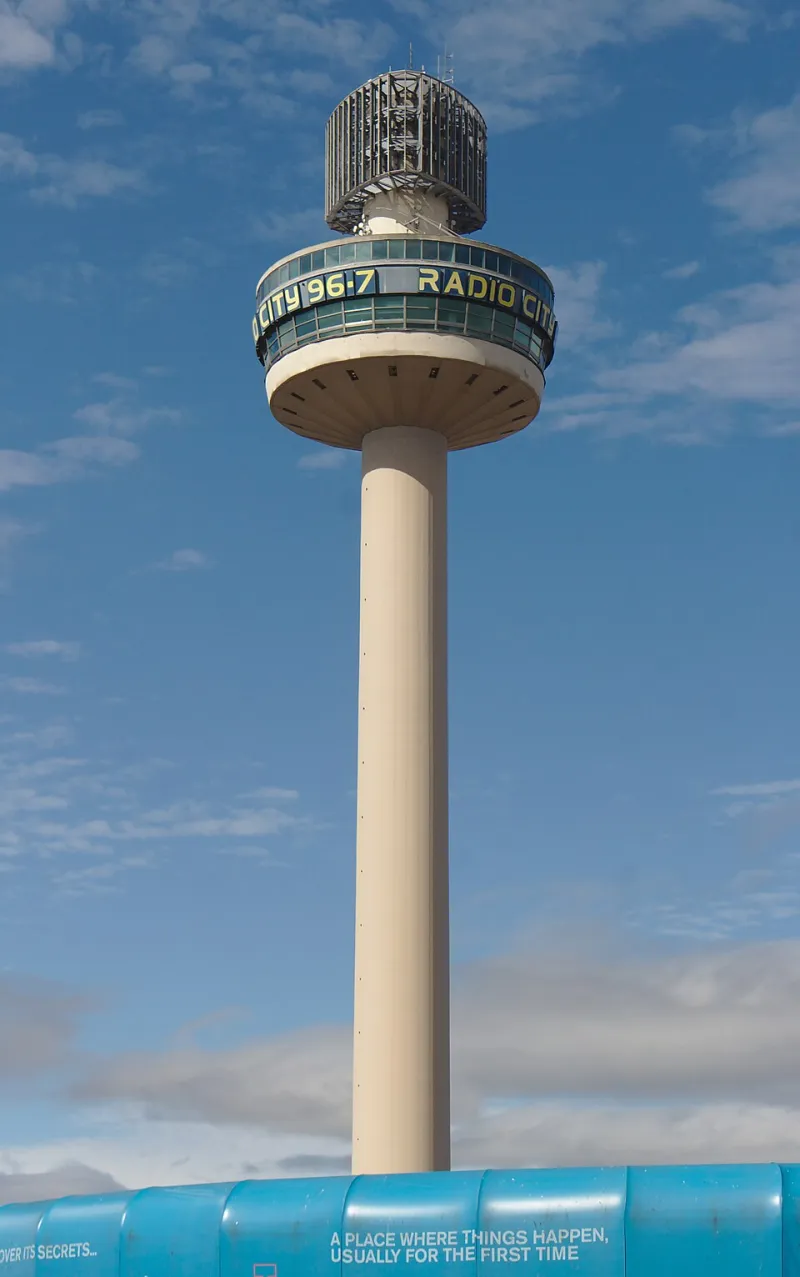
Photo: Rodhullandemu, CC BY-SA 4.0, via Wikimedia Commons
Somewhere outside Terre Haute, Indiana, there's a transmitter building that hasn't been unlocked in eleven years. The call letters are still stenciled on the cinderblock wall in faded blue paint. Inside, according to someone who slipped through a busted side panel last spring, there are shelves of quarter-inch tape reels, a decomposing production log from 1987, and a cart machine with a cartridge still loaded — some jingle for a car dealership that probably closed before smartphones existed.
That person was not a vandal. They were a signal ghost.
That's the informal name that's started circulating in certain corners of the internet — Reddit threads, Discord servers, niche Facebook groups with names like "Broadcast Archaeology" and "Lost Frequencies USA" — for the growing community of hobbyists, archivists, and audio obsessives who track down decommissioned radio stations and try to rescue whatever's left behind. They're part urban explorer, part media historian, part preservation activist. And the stuff they're finding is genuinely irreplaceable.
The Disappearing Broadcast Landscape
To understand why this community exists, you have to understand what happened to American radio over the last thirty years. The Telecommunications Act of 1996 blew the doors open on media consolidation, and companies like Clear Channel — now iHeartMedia — vacuumed up hundreds of regional stations. Local programming got gutted. DJs who'd been on the air for decades got handed pink slips. And the physical infrastructure of those stations — the towers, the studios, the tape libraries — got left behind, sold off, or simply abandoned when it wasn't economically convenient to deal with it.
What that created, unintentionally, was a kind of audio time capsule scattered across the American landscape. Thousands of hours of local content: high school football broadcasts, regional news coverage, locally produced music shows, call-in programs with community members who've since passed away. Voices that exist nowhere else.
"Corporate radio didn't see any value in that stuff," says one archivist who goes by the handle Deadwax_Dave online and has been doing this work out of his garage in Columbus, Ohio for six years. "They weren't going to digitize a thousand reels from a country station in rural Kentucky. That wasn't a revenue stream. So it just sat there and started to rot."
The Detective Work
Finding these places is its own discipline. Signal ghosts cross-reference FCC license databases — which are public record — with satellite imagery, local newspaper archives, and tips from former station employees who've found their way into these online communities. Sometimes a retired engineer will drop into a forum thread and hand over a floor plan or a storage unit location like it's nothing. Other times, the trail goes cold for months.
The detective work has its own language and methodology. Enthusiasts track "silent" licenses — stations that stopped broadcasting but whose FCC paperwork technically still exists. They map tower coordinates. They reach out to county property records to find out who owns the land a transmitter sits on. Some have made direct contact with the holding companies that absorbed defunct stations, occasionally convincing a facilities manager to let them in for a look.
"Most of the time, nobody even knows what's in these buildings," says a woman in Memphis who asked to be identified only as Carolyn and has helped digitize material from three shuttered mid-South stations. "You call the right person and they're like, yeah, sure, take whatever. They were about to throw it in a dumpster anyway."
The preservation itself is painstaking. Magnetic tape degrades. Oxide sheds. Reels that were stored improperly — too much humidity, too much heat — can be completely unplayable without a baking process that carefully drives moisture out of the tape before it's run through a machine. Not everyone in the community has the equipment to do that work, which has pushed some signal ghosts into loose networks where skills and gear get shared.
What the Tapes Actually Hold
The content that comes out of these recoveries ranges from mundane to genuinely extraordinary. Cart machines loaded with old station IDs and jingles are common — those get shared widely online because they're fun and nostalgic and easy to appreciate. But the deeper material is where things get interesting.
Deadwax_Dave describes finding an unaired interview from a small-market station in southern Ohio — a local musician who recorded one album in the early '80s, pressed maybe two hundred copies, and then disappeared from public life. The tape sat in a milk crate for four decades. "That guy's family didn't know that interview existed," he says. "We found them on Facebook. They cried."
There are sports broadcasts from teams that no longer exist. Coverage of local disasters and community events that made regional news but never got picked up nationally. Call-in shows that function as accidental oral history, capturing how people in specific places felt about specific things in specific moments. It's the kind of granular, hyperlocal cultural record that algorithms and national media have never been equipped to create — and that institutional archives rarely had the mandate or resources to preserve.
"Libraries and universities are starting to pay attention," Carolyn notes, "but they've always been under-resourced for this kind of thing. The signal ghosts are doing the work that should've been funded decades ago."
The Ethics of the Hunt
Not everyone in the community approaches this the same way, and there's ongoing tension about where the line sits between preservation and trespassing. Some signal ghosts operate strictly above board, making contact with property owners before they go anywhere near a site. Others are more willing to squeeze through a broken panel and ask forgiveness later, especially when they believe the alternative is a bulldozer.
The community generally polices itself on this — there's little patience for people who show up just to loot equipment for resale, or who damage sites in the process of exploring them. The ethic, stated or unstated, is that the material belongs to the communities that created it, and the job is to get it somewhere it can be accessed and heard.
Some of the recovered audio has ended up on Internet Archive, which has become a de facto public library for this kind of material. Other collections have been donated to local historical societies or university media departments. A few enthusiasts have launched their own streaming archives, broadcasting recovered content from defunct stations as a kind of ghost signal — the dead station's voice, still transmitting.
Why It Matters Now
There's something that feels urgently relevant about this work in 2024, when the dominant conversation about media is all algorithms and platforms and engagement metrics. The signal ghosts are chasing something that the current media ecosystem structurally cannot produce: a record of what it actually sounded like to be in a specific American place at a specific American moment, unfiltered by national editorial priorities or advertiser interests.
Local radio, at its best, was a genuinely democratic medium. It reflected communities back to themselves. When consolidation killed it, that reflection disappeared — and with it, a lot of the evidence that those communities ever had a distinct voice at all.
The people crawling through abandoned transmitter buildings are trying to recover that evidence before it crumbles into dust. They're not getting paid. There's no algorithm rewarding them for it. They're doing it because they believe the frequency mattered, even if nobody's broadcasting on it anymore.
The signal is gone. But the ghosts are still listening.