Ghost Signals: The Young Hunters Tuning Into Frequencies the World Forgot to Hide
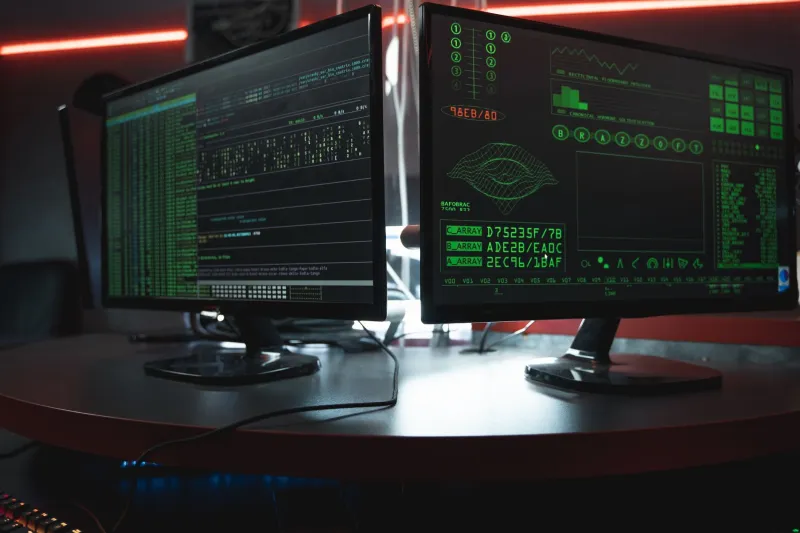
Somewhere between midnight and 2 a.m., a 22-year-old in a Columbus, Ohio apartment is staring at a waterfall display — a cascading visual graph of radio spectrum activity — watching for anomalies. He's not a government contractor. He's not ex-military. He's a junior graphic design student with a $25 USB dongle plugged into his laptop and a homemade antenna made from copper wire and a coat hanger. And he just picked up something that absolutely should not be there.
"It was this repeating burst pattern on a frequency nobody uses anymore," he explains over Discord, going by the handle @spectral_drift. "Totally structured. Not noise. I recorded it, ran it through a decoder, and it partially resolved into what looked like position coordinates. I still don't know what it was. That's the whole point. That's why I can't stop."
This is the underground world of software-defined radio — SDR for short — and it's pulling in young Americans faster than almost anyone in the mainstream tech world has noticed.
A $25 Ticket to the Invisible World
The entry point is almost absurdly accessible. A basic RTL-SDR dongle, originally designed to receive digital TV signals, can be repurposed to scan massive swaths of the radio spectrum when paired with free software like SDR#, GQRX, or the open-source powerhouse GNU Radio. For less than the cost of a streaming subscription, anyone with a laptop and a little patience can start monitoring everything from aircraft transponders and weather satellites to pager networks, utility telemetry, and signals that don't show up on any official frequency allocation chart.
Online communities — spread across Reddit's r/RTLSDR, dedicated Discord servers, and forums like Signal Identification Wiki — have become the connective tissue for thousands of hobbyists who share recordings, trade decoding techniques, and collectively try to identify the weird, the unexplained, and the deliberately obscure.
What's interesting is who's showing up. It's not just the old-guard ham radio crowd. It's zoomers. Kids who grew up on TikTok and YouTube tutorials, who are just as comfortable compiling open-source code as they are scrolling a feed. They bring a different energy to the hobby — less reverent, more chaotic, deeply collaborative, and honestly kind of fearless about diving into things they don't fully understand yet.
The Thrill Is the Unknown
Ask anyone in these communities what keeps them hooked and they'll give you some version of the same answer: it's the not-knowing. The electromagnetic spectrum is enormous and most of it is invisible to the average person, but it is absolutely not empty. Utilities communicate through it. Aircraft broadcast into it. Satellites whisper through it. And then there are the signals that don't fit neat categories — the number stations, the encrypted bursts, the low-frequency anomalies that cluster around military installations, the pirate broadcasts that flicker on and off like someone lighting a match in the dark.
Maddie, a 24-year-old in Portland who runs a small SDR-focused YouTube channel, describes the experience as "digital archaeology with a live feed." She got into it after watching a video about decoding NOAA weather satellite images directly from orbit using nothing but an SDR and a handmade antenna. "The moment I pulled my first actual satellite image from the sky on my own hardware, I was done. That was it. I needed to know what else was up there."
Her channel documents everything from intercepting Starlink telemetry to attempting to decode mysterious 40-meter shortwave transmissions. She's careful to draw a line between passive monitoring — which is broadly legal under federal law for unencrypted signals — and anything that crosses into wiretapping territory. It's a line her community talks about constantly.
Navigating the Legal Gray Zone
Here's where it gets complicated, because the legal landscape around radio monitoring in the United States is genuinely murky in places. The Electronic Communications Privacy Act draws distinctions between different signal types, and while receiving unencrypted transmissions is generally protected, decoding encrypted communications or rebroadcasting intercepted content can create real legal exposure. Most serious hobbyists know this and operate carefully within those limits — documenting, analyzing, and sharing metadata or spectral signatures rather than content.
But the gray areas are real. Pager networks, for instance, still carry unencrypted medical and emergency service data across many US cities, and SDR users can pull that information without much effort. The community broadly treats this as a privacy issue to self-regulate, not a legal loophole to exploit. There's an ethics culture developing in these spaces that's actually pretty thoughtful — more so than you might expect from a group of anonymous internet strangers who are, essentially, eavesdropping on the invisible world.
"We talk about it a lot," says @spectral_drift. "Nobody wants to be the person who gets the hobby regulated into the ground because they did something stupid. We're trying to build something here."
Where the Community Lives
The social infrastructure around SDR hobbyism is genuinely impressive. Beyond the major Reddit and Discord spaces, there are collaborative databases where users log unidentified signals and pool analysis, wiki-style repositories cataloging known signal types and their audio signatures, and open-source decoder projects that expand what any individual user can do with their hardware.
There's also a growing crossover with adjacent underground communities — the pirate radio world, the shortwave nostalgia scene, the number station obsessives who have been cataloging Cold War-era mystery broadcasts for decades. SDR gives all of these subcultures a shared technical language and a shared toolkit, and it's creating unexpected conversations between generations of radio weirdos who might otherwise never have crossed paths.
The aesthetic appeal matters too. Waterfall displays — those cascading spectral visualizations — have become genuinely beautiful objects in the community's visual culture. People post screenshots the way others post photographs. There's a whole visual language developing around the shapes of different signal types: the jagged teeth of a frequency-hopping military radio, the smooth sine curves of a navigation beacon, the clustered chaos of a busy urban spectrum.
Tuning Into Something Bigger
What this community is really building, underneath all the technical enthusiasm and the late-night frequency hunting, is something that feels pretty essential to the Fringe Signal ethos: a refusal to accept the official version of what's available to you. The mainstream tech world wants you on curated platforms, consuming pre-packaged content through approved channels. These kids are pointing homemade antennas at the sky and pulling down satellite imagery, decoding mystery transmissions, and mapping the invisible infrastructure of modern civilization — all for the cost of a fast food meal and a willingness to read documentation.
The spectrum doesn't care who you are. It doesn't have a paywall. It doesn't have an algorithm deciding what you're allowed to find. You just need to know how to listen.
And a growing number of young Americans are learning, very quickly, that the most interesting signals are the ones nobody officially told you were there.