When the Grid Goes Dark: The Preppers Betting Their Lives on Shortwave and Static
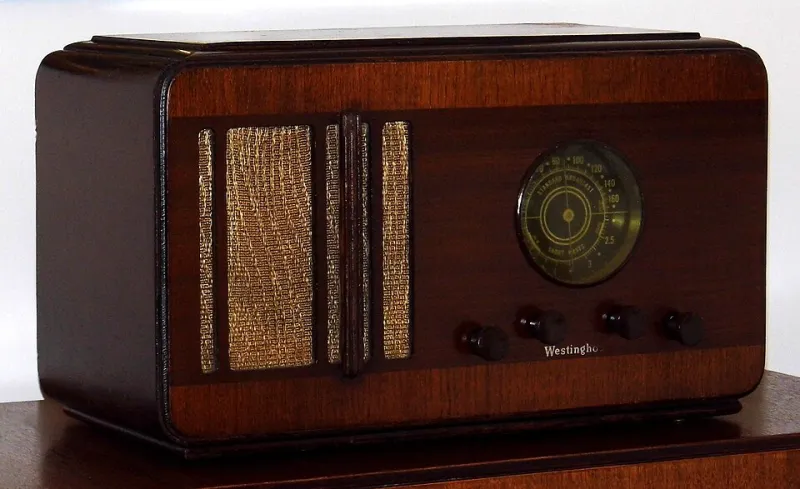
Photo: Joe Haupt from USA, CC BY-SA 2.0, via Wikimedia Commons
Somewhere in rural Montana, a man named Garrett has a basement that looks like a radio museum got into a fistfight with a military surplus store. Shelves lined with shortwave receivers. A hand-crank emergency radio still in its original box, next to three others just like it. Reel-to-reel decks. A vintage Grundig that he swears can pull in signals from halfway across the planet on a clear night. Garrett isn't a collector in the romantic sense. He's not chasing nostalgia or hunting for a vibe. He's preparing for what he calls "the long quiet" — the moment when the internet stops, the cell towers go dark, and the only thing left broadcasting is the electromagnetic spectrum itself.
"People think preparedness is about food and guns," he told us over a scratchy phone connection. "But information is the real survival resource. If you don't know what's happening, you can't make decisions. And when the digital infrastructure collapses, analog is what's left."
This isn't a fringe position anymore — or rather, it's exactly the kind of fringe that Fringe Signal was built to cover, because the margins are where the real conversations happen.
The Signal That Survives Everything
Shortwave radio has been declared dead approximately a hundred times. Satellites were supposed to kill it. The internet was definitely going to kill it. Streaming finished it off for good, probably. And yet shortwave persists, humming along on frequencies between 1.7 and 30 MHz, bouncing signals off the ionosphere and landing them thousands of miles away without a single router in the chain.
For preppers, that's not a quirk — it's the whole point. Shortwave doesn't need cell infrastructure. It doesn't need a functioning internet backbone. It doesn't need electricity at the receiving end if you've got a battery or a hand crank. In a scenario where a solar flare, a cyberattack, or a cascading grid failure takes down digital communication, shortwave is still there, doing its thing, completely indifferent to your Wi-Fi password.
Radio engineer and amateur operator Dana Mercer, who runs workshops out of a community center in western Virginia, has watched the demographics of her classes shift dramatically over the past five years. "I used to get mostly older hobbyists and tech enthusiasts," she said. "Now I'm getting a really wide range — younger people, families, people who've never touched a radio in their lives but are specifically there because they're worried about infrastructure resilience."
Mercer is careful to separate the technical reality from the more apocalyptic framing some of her students bring. But she doesn't dismiss the underlying logic. "The concern isn't irrational," she said. "We've seen what happens when cell networks get overwhelmed during disasters. We've seen communities cut off for weeks. Having a fallback communication system is just... smart."
Dead Media as Survival Gear
Shortwave is only the beginning. Within preparedness communities — spread across forums, encrypted messaging apps, and yes, some very active Discord servers — there's a growing appreciation for what tech culture dismissively calls "dead media." Cassette tapes. AM/FM receivers. VHF scanners. Even CB radio, which had its cultural moment in the '70s and never really left rural America.
The appeal is the same across all of it: these technologies operate on principles that don't depend on servers staying online or companies staying solvent. A cassette tape recorded in 1987 will still play on a deck with working heads and a power source. An AM signal doesn't require a content delivery network. A CB channel doesn't have a subscription model.
Prepper forums are full of threads debating the merits of specific vintage receivers. The Grundig Satellit 750. The Sony ICF-SW7600GR. The Tecsun PL-880. These aren't audiophile conversations about warmth and tone — they're tactical assessments of sensitivity, battery consumption, and band coverage. It's gear talk, just for a very specific kind of scenario.
One forum moderator who goes by the handle "FallbackFreq" described the community's philosophy bluntly: "We're not Luddites. We use the internet. We understand how it works. That's exactly why we don't trust it to be there when we actually need it."
Fear, Prep, and the Politics of the Airwaves
It would be easy — and lazy — to write off this entire subculture as right-wing paranoia wearing a headset. The reality is messier and more interesting. Preparedness culture has always drawn from a politically diverse pool. Back-to-the-land progressives, off-grid homesteaders, Indigenous communities with deep historical reasons to distrust centralized infrastructure, urban mutual aid networks that organized during COVID — all of them have versions of this same conversation about communication resilience.
What's shifted recently is the urgency. Climate disasters are getting worse and more frequent, and anyone who lived through Hurricane Katrina, Superstorm Sandy, or the Texas grid failure of 2021 has a firsthand data point about what happens when digital infrastructure meets a serious physical crisis. The answer, usually, is that it fails in ways nobody planned for.
"After the Texas freeze, I started taking this seriously," said Priya, a teacher in Austin who has since gotten her amateur radio license and built what she calls a "communication go-bag" — a portable kit with a handheld transceiver, a shortwave receiver, and a solar charging panel. "It wasn't ideology. It was just: I watched people die because they couldn't get information or call for help. I don't want that to be me."
Her perspective is less about doomsday and more about what she calls "realistic resilience" — the acknowledgment that modern infrastructure is more fragile than we're encouraged to believe, and that having analog fallbacks is a form of community care as much as personal survival prep.
The Renaissance Nobody's Covering
Sales data for shortwave receivers and emergency radios have quietly spiked multiple times in the last decade, typically following major disasters or geopolitical escalations. Retailers who specialize in preparedness gear report that radio equipment is consistently among their fastest-moving categories. Online marketplaces see steady demand for vintage shortwave sets in working condition.
And yet mainstream media coverage of this trend tends to frame it either as eccentric hobbyism or as a symptom of right-wing paranoia — missing the much more complicated and genuinely interesting story underneath.
The truth is that a growing cross-section of Americans — politically diverse, geographically spread, ranging from deeply technical to complete novices — are quietly deciding that analog signal technology is too important to abandon entirely. Not because they want to live in the past, but because they've thought carefully about the future and decided they want a backup plan that doesn't depend on Mark Zuckerberg's servers staying online.
Garrett in Montana put it simply: "The grid will fail. Maybe not tomorrow. Maybe not for ten years. But it will fail, and when it does, whoever has a shortwave radio and knows how to use it is going to be in a very different position than whoever's standing there waiting for their phone to get a signal."
Static never sounded so strategic.