Rusting Giants: The Forgotten Broadcast Towers Nobody Wants You to Know About
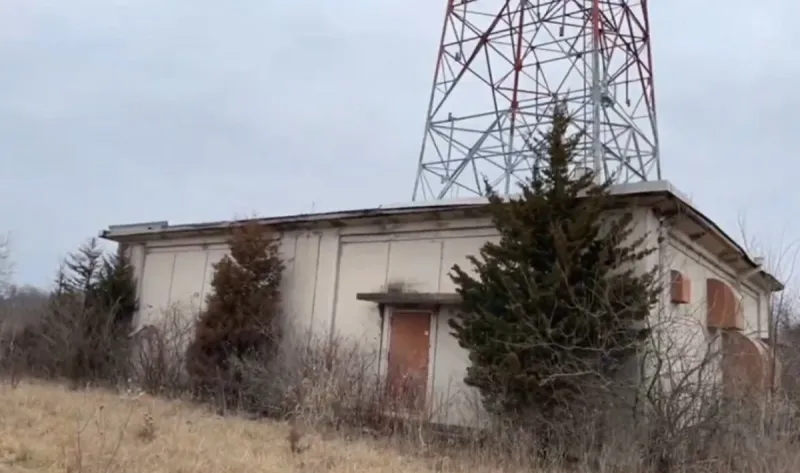
Photo: abandoned radio broadcast tower rural America rust, via townsquare.media
Drive far enough outside any mid-sized American city and you'll eventually spot one. It rises out of a cornfield or a pine thicket, three hundred feet of oxidized steel lattice climbing toward a sky that has long since stopped listening. No blinking red light at the top anymore. No hum of RF energy vibrating through the guy-wires. Just rust, silence, and the particular kind of melancholy that only dead infrastructure can produce.
These are America's abandoned broadcast towers — the skeletal leftovers of a golden era in radio and early television that most people never think about and almost nobody is paid to protect. There are hundreds of them, maybe more. Nobody's keeping an official count. And that's kind of the whole problem.
How They Got Here
The postwar communications boom left its fingerprints all over the American landscape. From the late 1940s through the 1980s, regional radio stations, local TV affiliates, and religious broadcasters erected towers with the kind of civic ambition that feels almost alien now. A tower wasn't just infrastructure — it was a statement. It said: we are here, we have something to say, and we can reach you.
When consolidation hit the broadcasting industry hard in the '90s — accelerated by the Telecommunications Act of 1996 — hundreds of smaller stations got absorbed, flipped, or quietly shuttered. The licenses got reassigned. The studios got gutted. But the towers? They stayed. Tearing down a steel structure of that scale costs real money, and for a lot of the corporate entities that inherited these properties, a dormant tower just sitting on a lease is cheaper than a demolition crew.
So they rust. And they wait.
The People Who Go Looking
Meet the folks who actually care about this stuff, and you start to understand that "urban exploration" is a deeply inadequate label for what they do. Marcus T., a 34-year-old electrical engineer from outside Knoxville, has spent the last six years photographing decommissioned towers across Tennessee, Kentucky, and the western Carolinas. He runs a modest blog that averages maybe 400 readers a post — but those readers are obsessive.
"Most of these sites have zero documentation," he told us over a phone call that stretched nearly two hours. "No historical marker, no Wikipedia page, nothing. The only record that a station ever existed might be an FCC filing from 1958 and a classified ad in a local paper that nobody digitized. If I don't go out there and photograph it, that history just... evaporates."
Marcus isn't alone. Online communities — Discord servers, niche subreddits, private Facebook groups that feel like secret societies — have quietly assembled into something resembling a preservation movement, even if nobody's using that word yet. They share coordinates, swap archival research, and argue passionately about the ethics of trespassing on properties that the owners have clearly abandoned in every meaningful sense except the legal one.
That tension is real. Most of these towers sit on private land, and accessing them without permission is technically illegal. But the explorers who do it tend to operate with a genuine reverence — no vandalism, no souvenirs, leave-no-trace ethics applied to industrial archaeology. "We're not there to break stuff," says Dani R., a photographer from rural Ohio who documents tower sites under a pseudonym for obvious reasons. "We're there because somebody has to be."
What Gets Lost When the Tower Goes Dark
The physical structure is only part of the story. The harder loss is the human one.
Every one of these towers was once the nervous system of a local community — pumping out farm reports, high school football scores, emergency weather alerts, Sunday sermons, polka hours, and blues shows that never would have made it onto a national network. The stations that transmitted from these towers weren't just entertainment. They were civic infrastructure. They were the sound of a place knowing itself.
Radio historian Claire Ostrowski, who has spent decades cataloguing small-market broadcast history for a university archive in the Midwest, puts it bluntly: "We've lost an enormous amount of cultural memory and we barely noticed because the replacement — streaming, satellite, algorithmic playlists — feels so abundant. But abundance isn't the same as rootedness. These stations were of somewhere. That's not replaceable."
Some communities are starting to push back against that erasure in unexpected ways. In a small town in western Kansas, a decommissioned AM tower that once carried a farm-and-country station has been adopted informally by the local historical society, which now uses it as a backdrop for an annual outdoor music event. Nobody owns the story officially, but everybody owns it culturally. The tower has become a landmark precisely because it no longer transmits anything — a monument to frequency.
The Documentation Race
The urgency here is real. Steel towers in neglected states deteriorate faster than you'd expect. Weather, vegetation, and the occasional storm take consistent bites. Some sites that were photographed five years ago are already structurally compromised. A few have collapsed entirely, leaving nothing but a concrete anchor pad and some scattered hardware.
The FCC maintains records of broadcast licenses, but those records don't track what happens to physical infrastructure after a license lapses. The American Tower Corporation and other infrastructure companies that sometimes inherit these sites have no particular incentive to memorialize them. State historic preservation offices are chronically underfunded and generally focused on buildings, not broadcast hardware.
Which means the archivists doing this work are, almost entirely, amateurs in the original sense of the word — people doing it for love, on their own time, with their own gear.
Marcus has started reaching out to local libraries and historical societies to donate his photo archives. A few have accepted. Most haven't known what to do with them. "The infrastructure for preserving this stuff doesn't really exist yet," he admits. "We're kind of building it as we go."
Signals Worth Saving
There's something that feels very now about this whole phenomenon — the idea that the most vital preservation work is happening outside institutions, driven by obsessives who found each other online and decided, without any official mandate, that something mattered enough to document.
It maps cleanly onto the broader DIY ethos that runs through underground culture: if the gatekeepers won't do it, you do it yourself. If the official record ignores something, you build the unofficial record. You show up, you point a camera, you share what you find.
These towers transmitted for decades. They carried voices and music and news and static across distances that once felt enormous. Now they stand silent, broadcasting nothing — except, maybe, to the people willing to go looking.
That signal is faint. But it's still there if you know how to tune in.