I Listened to Nothing for Seven Days and It Fixed Something in My Brain
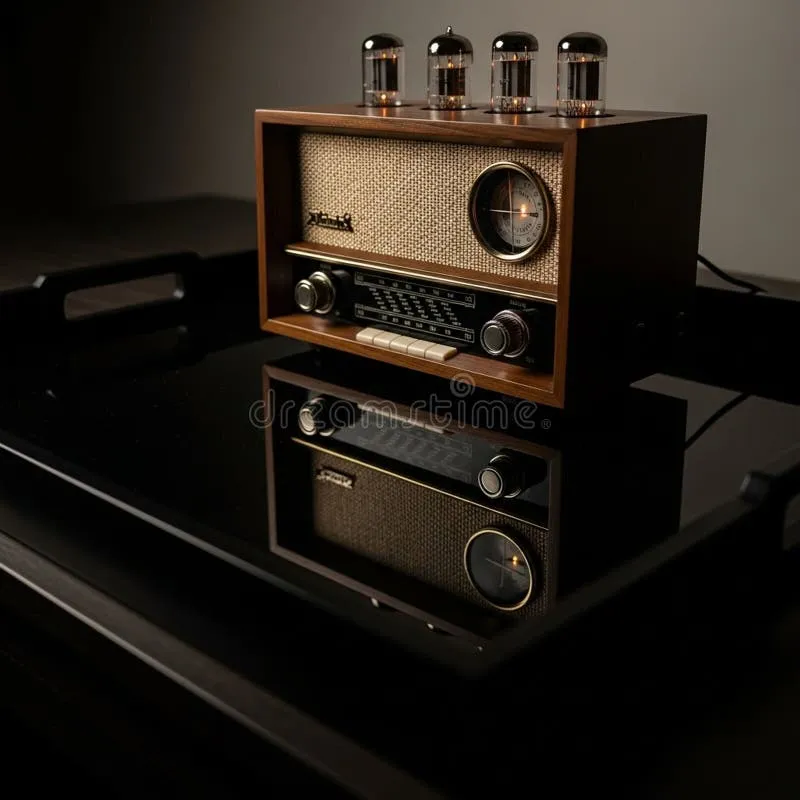
Photo: radio static frequency tuner close up moody lighting, via thumbs.dreamstime.com
Let me be honest about my starting condition: I was a person who could not eat breakfast without a YouTube video. My commute was a podcast about a podcast. My sleep required a sleep podcast, which is a sentence I should have found alarming sooner. My attention had been carved into so many small parcels that I wasn't consuming media so much as being consumed by it, one fifteen-second clip at a time.
So when the idea came up — seven days listening to nothing but radio static, dead air, and analog noise — I said yes the way you say yes to a cleanse. Smugly. Assuming it would be easy.
It was not easy. It was, unexpectedly, the most intense media experience I've had in years.
The Rules
Simple, brutal rules. For one week: no streaming, no podcasts, no playlists, no algorithmic anything in my ears. In their place: a shortwave radio and an old FM receiver, tuned mostly to frequencies where nobody lives. Static. Background hiss. The occasional ghost of a station two hundred miles away, surfacing at night when the atmosphere cooperates. If I wanted sound, it had to arrive by accident.
Day one was withdrawal, full stop. I reached for my phone roughly forty times before lunch. The static felt like an insult — a wall of meaningless noise where meaning should be. I caught myself waiting for the static to "resolve" into content, the way a buffer waits for a video. It never did. That's the whole deal with static. It doesn't owe you anything.
What Static Actually Sounds Like
By day three, something shifted. I started hearing structure in the noise floor — not patterns, exactly, but texture. Static isn't uniform. It has weather. Solar activity changes its character. Electrical appliances nearby inject their own rhythms into it. Around 3 a.m., distant AM stations bleed through the static like messages through fog, there for a minute, gone the next.
And here's the thing nobody tells you: listening to nothing is not the same as hearing nothing. My brain, deprived of a feed to doomscroll through, started doing actual work. I remembered things. Unfinished thoughts from years ago surfaced and completed themselves. I stood in my kitchen for twenty minutes listening to hiss and had what I can only describe as an idea — a whole one, start to finish, no notifications involved.
Researchers have been saying for years that the brain's default mode network — the thing that handles daydreaming, memory consolidation, and self-reflection — only kicks in during unfilled time. We've spent a decade engineering unfilled time out of existence. Every elevator, every checkout line, every red light has a screen. The static was the first unfilled time I'd had in years, and my brain reacted like a plant unwrapped from a box.
The Emptiness Is the Product
Here's my argument, and I'll make it plainly: the silence between signals is the underground's last luxury, and we should treat it like one.
Everything else has been colonized. The feed is infinite, the podcast queue is bottomless, and silence has become a market failure — a gap that some platform hasn't figured out how to fill and monetize. Static is one of the few sounds left that no company owns, no algorithm curates, and no ad interrupts. It's free in the old sense: unowned, unmanaged, unpurchased.
The underground media movements this site covers — the pirate radio operators, the tape heads, the shortwave hunters — all share one instinct: they want media that isn't managed at them. Static is the logical endpoint of that instinct. It's media with the content removed, leaving only the raw, honest fact of the medium itself. Radio without anyone deciding what you should hear.
What I Kept
The week ended. I went back to streaming, because I live in a society. But I kept the radio on the desk, and I kept a habit: twenty minutes of noise floor every morning before I let any feed touch me. It functions like a palate cleanser, a reset of my expectations for what sound owes me.
I no longer expect every moment to entertain me. That sounds small. It is not small. My tolerance for boredom — real boredom, the generative kind — has come back, and with it a patience I didn't know I'd lost.
Seven days of nothing taught me the most obvious thing in the world: the space between the signals is where you actually live. The signals are just other people's broadcasts passing through. The static is yours.