Undelivered: The Strangers' Mixtapes That Found You Instead
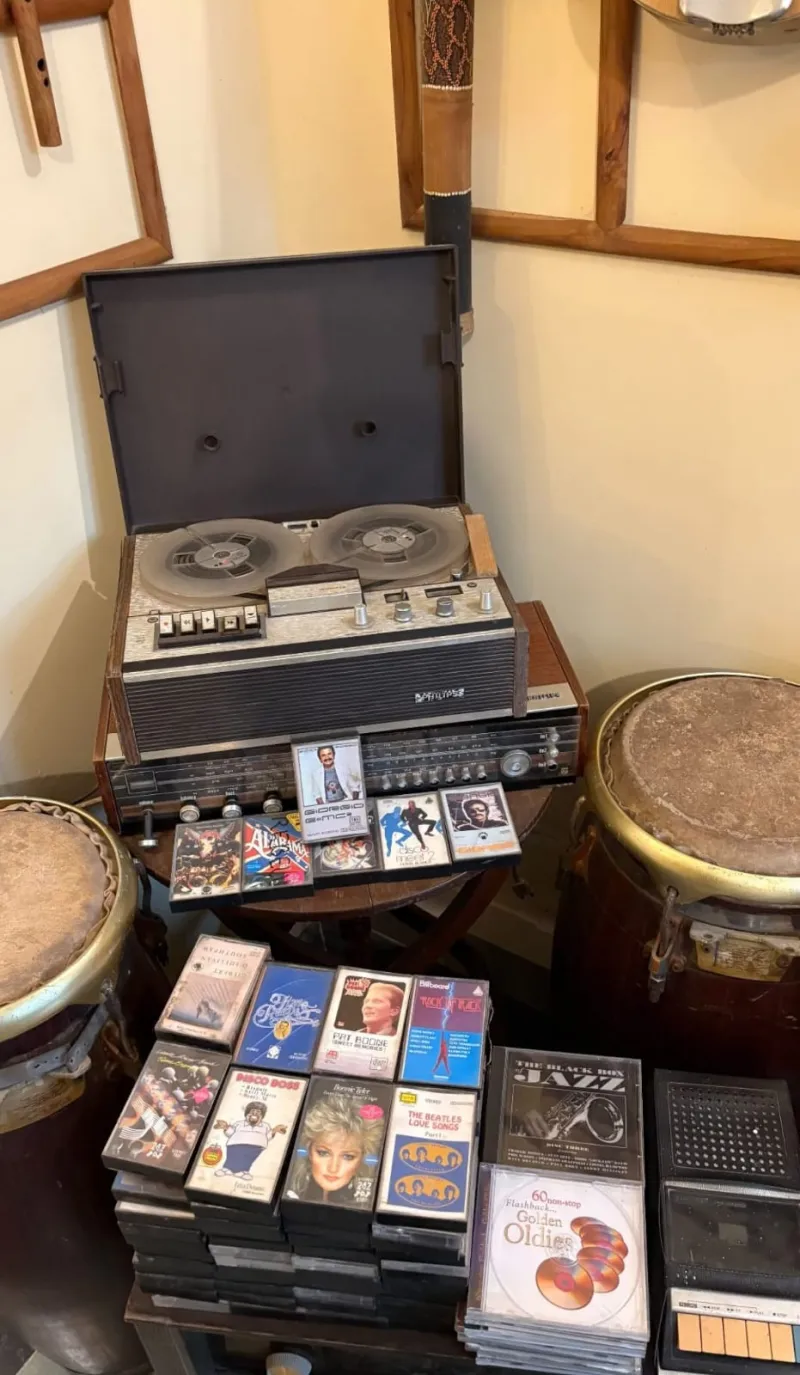
Photo: Himesh23, CC BY-SA 4.0, via Wikimedia Commons
There's a moment every serious thrift digger knows. You're flipping through a plastic bin at a Goodwill in some mid-sized American city — Columbus, Tucson, whatever — and your fingers land on something that doesn't belong in a donation pile. A jewel case with handwritten track listings in faded ballpoint. A cassette with someone's name Sharpied on the spine. A sealed envelope tucked inside a sleeve, addressed to someone who never opened it.
These are the orphaned mixtapes. And for a growing community of collectors, they're not just found objects. They're unsolved emotional archaeology.
The Mixtape as Confession Booth
Before streaming made curation frictionless and disposable, making someone a mixtape was an act of profound vulnerability. You were handing another person a map of your interior life — every song selection a coded declaration, every sequencing choice a deliberate emotional argument. The handwritten liner notes weren't decoration. They were the whole point.
So what happens when that map never reaches its destination?
Marcellus T., a 34-year-old record collector based in Portland, Oregon, has spent the last six years cataloguing what he calls "ghost playlists" — physical media he's recovered from estate sales, swap meets, and thrift stores that bear clear evidence of being made for someone specific. He estimates he's accumulated over 200 individual items. Some are cassettes from the late '80s. Some are CD-Rs from the early 2000s with printed inserts that look like they took actual hours to design in Microsoft Word.
"The ones with liner notes are the ones that wreck me," he says. "There's a tape I found at an estate sale in Eugene — the woman who owned the house had died in her late eighties. Inside this cassette case was a note that said, 'For when you need to remember what summer felt like.' That's it. No name. No date. Just that."
He never found out who wrote it, or whether it was ever meant for the woman whose belongings he was sorting through. The tape itself — a mix of Chet Baker, Emmylou Harris, and a few songs he still hasn't been able to identify — sits in a protective sleeve on his shelf. "I can't play it," he admits. "It feels like reading someone's diary."
Wrong Address, Right Feeling
Not all lost mixtapes stay lost through tragedy. Some get misdirected the old-fashioned way: bad handwriting, transposed zip codes, forwarding addresses that never forwarded. Priya N., who runs a small music blog out of Chicago, received a package in 2019 that wasn't hers. Inside was a homemade vinyl lathe-cut — the kind of boutique custom pressing you'd order from a small indie service — with a note that read, "Track 4 is the one I couldn't say out loud."
"I tried everything to figure out who it was meant for," she says. "The return address was a P.O. box that had been closed. The name on the package was just initials." She eventually played it. Track 4 was a recording of someone singing an original song over a bedroom acoustic guitar, the kind of raw, shaky performance that sounds like it cost the person something real to make.
"I ugly-cried in my kitchen," she says. "I don't even know these people. But I felt the weight of whatever that was — whatever they couldn't say."
Priya still has the record. She wrote about it once, obliquely, on her blog. She got seventeen emails from people who said they'd had almost identical experiences.
The Emotional Archaeology of Someone Else's Taste
What makes lost mixtapes uniquely affecting — different from, say, a stranger's old photographs or a found journal — is the way music functions as pure emotional shorthand. A sequence of songs isn't just a list. It's a mood architecture, a narrative someone built in real time.
Collectors who spend serious time with these objects often describe a process of reverse-engineering a personality. What does it mean that someone opened with a Neutral Milk Hotel deep cut and closed with a Dolly Parton B-side? Why does this 1994 cassette have three different versions of the same Smiths song, each from a different compilation?
"You start to feel like you know them," says Deondre W., a DJ and archivist from Atlanta who maintains an actual physical archive of found playlists. "Not their name or their face. But their taste, which is kind of more intimate anyway. Taste is how people tell you what they wish they could just say directly."
Deondre has started digitizing select tapes from his collection and uploading them to a private SoundCloud account he shares with a small community of like-minded collectors. No metadata, no context — just the audio, sequenced exactly as the original creator intended. "We listen to them together sometimes, over Discord. Just strangers listening to a stranger's mixtape. It's weird and kind of beautiful."
The Ghost in the Machine
There's a philosophical wrinkle here that the collectors tend to circle back to without quite resolving. When you listen to a mixtape that was never delivered, whose experience are you having? The creator made it for someone specific — someone who had a shared history with them, who would've understood the references, who might've recognized the inside joke buried in track seven. You're receiving a signal that wasn't tuned to your frequency.
And yet — it lands anyway. Maybe differently than intended. Maybe more.
"Music doesn't care about the original address," Priya says. "It just goes where it goes."
Marcellus keeps a running document of the liner notes he's transcribed from his collection. He's been thinking about turning it into a zine — just the notes, no context, no explanation. Anonymous voices leaving messages for people who may or may not exist anymore.
"It's the most human thing I've ever seen," he says. "All these people, trying so hard to say something real through someone else's songs. Most of them never got through. But here we are, still receiving."
The mixtape never dies. It just finds a different listener.
Have you ever found a lost mixtape or received one meant for someone else? We want to hear about it. Hit us at the contact page — the signal's always open.