Xerox and Resist: Why Zinesters Are Choosing Invisibility Over Virality
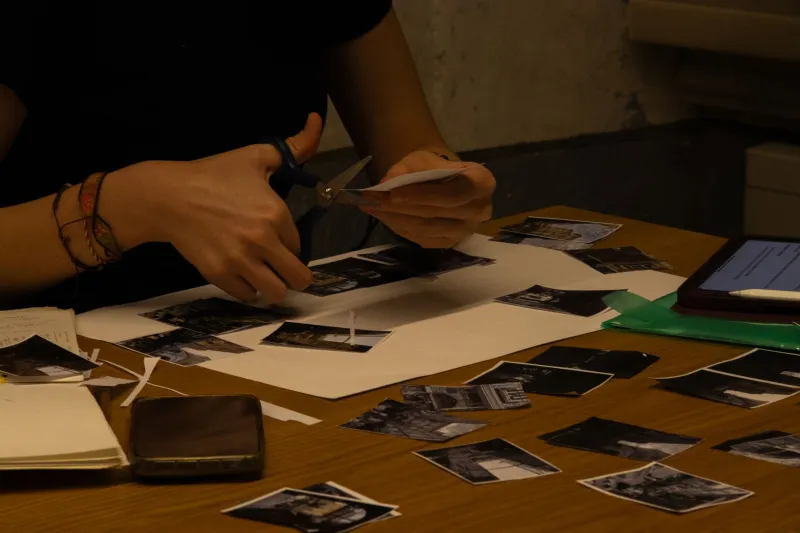
Somewhere in a copy shop in Albuquerque, a 23-year-old named Drea is feeding her fourth ream of paper into a Xerox machine at 11 p.m. on a Tuesday. She's not running a small business. She's not printing flyers for a gig. She's making fifty copies of her quarterly zine — a hand-collaged, deliberately lo-fi publication about queer ecology and desert folklore — and she has exactly zero plans to post about it online.
"If you find it, you find it," she says, without looking up from the machine. "That's the whole thing."
That's the whole thing. It sounds almost aggressively anti-modern. In an era when every creative impulse is immediately funneled into content strategy, when discoverability is treated like a moral obligation, Drea and a growing cohort of young zinesters across the country are making a deliberate bet against visibility. They're not being shy. They're being political about it.
The Feed Is the Problem
To understand why print is having this particular moment, you have to understand what people are running from. Algorithmic platforms don't just distribute content — they shape it. The feedback loop of likes, shares, and reach metrics quietly trains creators to optimize for engagement rather than expression. You start writing what you actually think and end up writing what performs. For a lot of young artists and writers, that drift is slow enough to miss until it's already happened.
Zines short-circuit that process entirely. There's no analytics dashboard for a photocopied pamphlet left in a bathroom at a punk show in Richmond, Virginia. There's no engagement rate on a hand-stamped envelope mailed to a stranger in Portland who filled out a paper form at a record fair. The feedback you get is a conversation, a letter back, a face you recognize at the next distro table. That's a fundamentally different kind of signal.
Marcus, a 27-year-old in Chicago who runs a zine called Gridlock — a publication about urban planning, housing justice, and the aesthetics of brutalism — puts it plainly: "I spent two years trying to build an audience on Instagram for this stuff. I got decent numbers. I also got completely hollow. Now I print three hundred copies, distribute them through coffee shops and radical bookstores, and I know every single person who's reached out to me. That's the community I actually wanted."
Scarcity as Feature, Not Bug
There's a counterintuitive logic at the heart of the zine revival that's worth sitting with: limitation is generative. When you can only print a hundred copies, every decision matters more. The paper stock. The font. The way you fold it. The staple placement. These aren't just aesthetic choices — they're acts of intention that digital publishing rarely demands.
And scarcity changes the relationship between creator and reader. A zine you tracked down at a distro in Brooklyn or found tucked into a used book at a thrift store in Austin carries a different weight than content served to you by an algorithm that decided you'd probably like it. You chose it. Or it chose you, through some chain of human decisions that felt almost like fate. That's not an accident — it's a design philosophy.
Jordan, who publishes a horror fiction zine called Teeth & Static out of their apartment in Pittsburgh, describes getting a handwritten letter from a reader in rural Montana who'd found a copy at a zine fest in Missoula. "They said they'd been looking for something like this for years and didn't know it existed. That letter meant more to me than any follower count ever has. There's no metric for that moment."
The Distro Network Is the Infrastructure
What makes the current zine wave feel genuinely different from previous revivals is the sophistication of its distribution infrastructure — built entirely outside corporate platforms. Zine fests have exploded across the US, from the long-running Chicago Zine Fest to newer events in cities like Nashville, Salt Lake City, and Tucson. Independent bookstores and radical libraries have quietly become crucial nodes in a physical distribution network that rivals anything algorithmic in its reach — just slower, and by design.
Online zine distros exist too, but they operate more like co-ops than storefronts. They're often run by volunteers, organized around principles of mutual aid, and deliberately resistant to the growth-at-all-costs logic of e-commerce. The point isn't to scale. The point is to sustain.
There are also informal networks — group chats, mailing lists, physical bulletin boards — through which zinesters coordinate swaps, share distro contacts, and pass on leads about cheap copy shops willing to let you run a hundred pages at midnight without asking questions. It's a shadow infrastructure, and it works precisely because it stays in the shadows.
Ink as Ideology
It would be easy to romanticize all of this into a simple nostalgia trip — kids playing at being punk because the aesthetic is cool. But spend any time in these communities and what you find is something more considered. Many of these zinesters have read deeply about media history, platform capitalism, and the political economy of attention. They're not anti-technology in some blanket sense. They're specifically, thoughtfully anti-surveillance-capitalism, anti-algorithmic-curation, anti-the-particular-way-digital-platforms-have-restructured-creative-life.
Print is the medium that most completely escapes that system. You can't A/B test a zine. You can't run targeted ads against its readership. You can't harvest behavioral data from someone reading it on the subway. For a generation that grew up watching every digital space get colonized by engagement optimization, there's something genuinely radical about a format that resists colonization by design.
Drea, back at her copy shop in Albuquerque, is pulling finished pages off the tray and collating them with practiced efficiency. She'll fold and staple them tomorrow morning, then spend the afternoon dropping stacks at three different spots around the city. Some will get picked up. Some won't. She has no way of knowing which.
"That's fine," she says. "Actually, that's the point. I made something real and I put it into the world. What happens next isn't mine to control."
In a media landscape built entirely around the illusion of control — over audience, over reach, over the precise optimization of every creative decision — that might be the most radical statement of all.