The Cold War Never Signed Off: Inside the Obsessive World of Numbers Station Listeners
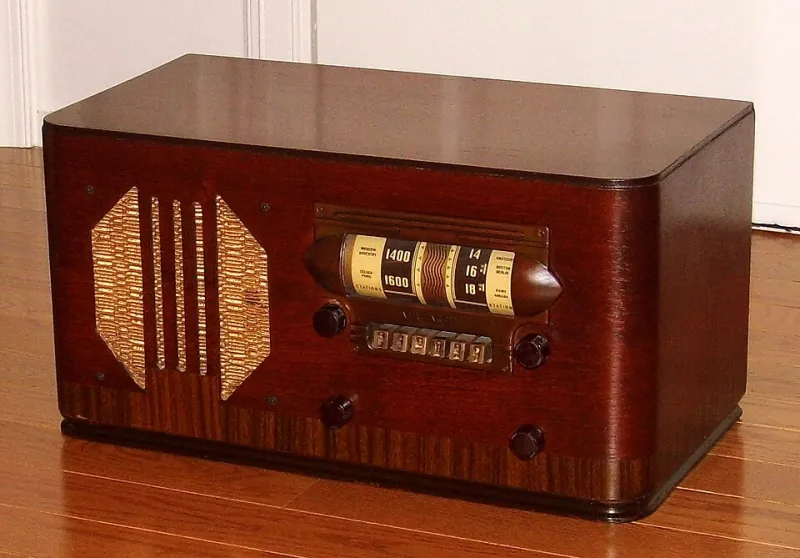
Photo: Joe Haupt from USA, CC BY-SA 2.0, via Wikimedia Commons
At 4:00 a.m. Eastern, on a frequency I'm not going to print here, a synthesized voice begins counting. Digits, in clipped groups of five, delivered with the warmth of a voicemail from a machine that has never heard of warmth. This repeats for fifteen minutes. Then the interval signal — a looping melody, or a burst of static shaped to sound like a bird call — and then nothing.
Somewhere, presumably, the intended recipient is writing those numbers down and decoding them with a one-time pad. Everyone else in the world, including the amateur radio operators logging the transmission from bedrooms in Ohio and garages in Rotterdam, is eavesdropping on a conversation they will never understand.
Welcome to the world of numbers stations — the Cold War's strangest leftover, and one of the last corners of the electromagnetic spectrum where secrecy isn't a bug. It's the entire product.
What Exactly Is Being Broadcast?
A numbers station is, on its face, simple: a shortwave transmitter reads aloud sequences of numbers, letters, or code words, often for minutes or hours at a time. The format has barely changed since the First World War. The assumption — supported by declassified history, defector testimony, and a 1998 court case in the UK involving two men arrested near a numbers station transmitter — is that these are intelligence communications, one-way messages to agents operating in foreign countries.
The genius of the method is its asymmetry. Anyone with a cheap shortwave receiver can hear the message. Almost no one can read it. The numbers are typically encrypted with a one-time pad, a cipher that is mathematically unbreakable when used correctly. Unlike your email, your location data, or your browsing history, a numbers station transmission is a genuine secret — broadcast publicly, readable by exactly one person with the right pad of paper.
Stations have been tracked on every continent. Some are famous in the hobby by nickname: the eerie "Lincolnshire Poacher," which used an English folk tune as its interval signal before a male voice read five-digit groups; the Swedish "Yankee Hotel Foxtrot" reading letter codes in a flat female voice; the Cuban-linked "V02," which still transmits on a reliable weekly schedule. Some stations have run for half a century. Some appear without warning, transmit for a month, and vanish.
The People Who Map the Unknowable
The listeners are a small, devoted, global community. They run wikis and schedules. They record every transmission, compare audio fingerprints, triangulate transmitter locations using the slight differences in when a signal arrives at receivers thousands of miles apart. They've reverse-engineered propagation patterns to make educated guesses about where a station's transmitter sits — often a remote facility, sometimes literally an antenna farm in the desert.
What they can't do, ever, is decode the messages. And they've made peace with that. The hobby isn't about breaking the code; it's about documenting the existence of the code. Every logged transmission is a small act of witness: proof that governments are still speaking in a language the public can hear but not read.
One longtime listener put it to me like this: "Everything else in your life is legible to somebody. Your phone knows where you are. Your emails are backed up somewhere. A numbers station is the one channel where the secrecy actually flows the right way — away from you. It's kind of beautiful."
Why It Matters Now
There's a temptation to file numbers stations under charming anachronism, alongside fax machines and phone books. That would be a mistake — and the recent years of great-power tension have made the mistake more obvious.
Shortwave is nearly impossible to censor remotely. It crosses borders without permission. It requires no internet infrastructure, no satellite, no app store. For intelligence services operating in hostile territory, a shortwave receiver and a one-time pad remain one of the few communication methods with no digital footprint whatsoever. There's nothing to hack, nothing to subpoena, nothing to intercept in transit — because the message is broadcast to everyone and readable by no one.
In other words, the technology the Cold War built for spies has accidentally become the last truly private channel on Earth. Privacy advocates and radio hobbyists find themselves making the same argument from opposite directions: analog broadcast, unbreakable by design, is a hedge against a world where every digital byte is potentially monitored.
Some hobbyists have even built their own practice stations — encoding messages to friends with homemade ciphers, transmitting on open amateur bands, keeping the format alive as folklore as much as tradecraft.
Listen While You Can
The stations keep transmitting. The listeners keep logging. And the numbers keep arriving, five at a time, to recipients unknown, on frequencies that belong to no one and everyone.
You don't need permission to listen. You need a shortwave receiver, patience, and the acceptance that you will hear something genuinely secret and never know what it says. In 2025, that might be the rarest experience left in media: a broadcast meant for someone else, untouched by any recommendation engine, delivered through the night sky on nothing but radio waves.
Tune in sometime. The Cold War never hung up.