The Yondr Generation: What Happens When Ten Thousand Fans Can't Post About the Show
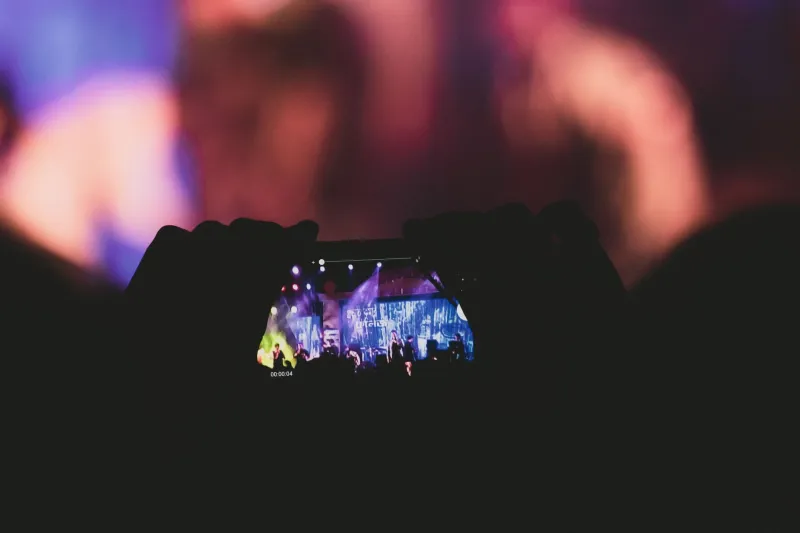
Let's get the objections out of the way first, because they're predictable. Locking phones in pouches at concerts is inconvenient. It's paternalistic. It's a security risk if there's an emergency. It's — my personal favorite — "anti-fan," as if the fan experience peaks at the vertical video.
All of these arguments were made when phone-free shows started spreading, and all of them have been made again as the practice has gone from a Madonna-level curiosity to standard policy at venues from San Francisco to Brooklyn. And yet the pouches keep spreading. Maybe that's because the complaints, while sincere, are answering the wrong question.
The right question isn't whether phone-free shows are fair. It's what a live show is for — and whether we've forgotten.
The Concert Was Never the Content
Somewhere in the last decade, the live show became raw material. You bought a ticket, stood in the crowd, and produced. Vertical clips for the group chat, stories for the grid, a blurry sixty-second proof-of-experience. The show ended; the content rollout began. And the strange part is how little anyone enjoyed it. Ask anyone honestly: does rewatching your own shaky footage of "the hits" bring the night back? It doesn't. It just reminds you that you watched a screen at a show you paid triple digits to attend.
Phone-free policies — the Yondr pouch model, where your phone gets locked in a neoprene sleeve you keep on your person and unlock at exit stations — don't just remove the distraction. They remove the audience for your distraction. There's nobody to perform for. The feed is unreachable. You're stuck with the band and your own attention, which sounds like a punishment until you experience it.
The Night That Rewires You
Talk to people who've been to one, and a pattern shows up. They describe it in almost embarrassed, half-spiritual terms: crying during a song they'd heard a hundred times, actually looking at the person they came with, standing through an entire set without a single urge to check anything.
One fan I spoke to after a phone-free show in Chicago said the strangest part was the drive home. "I didn't post anything. There was nothing to post. The show just... stayed mine. It's two weeks later and it still feels like it's mine." That's not a gimmick. That's what live music did for everyone before 2010, and it's what the feed quietly took.
The Counterargument That Almost Works
The emergency-access concern deserves a serious answer, and the industry has one: unlock stations throughout the venue, staff at every door, protocols refined over years of doing this. It's not perfect. Nothing is. But note the asymmetry in how we weigh risk. We accept a thousand daily indignities from our phones — the tracking, the doom-scrolling, the attention harvesting — without a second thought. The one inconvenience that cuts against the phone's interests is the one we litigate endlessly.
And the "anti-fan" crowd? I'd gently point out that artists locking phones are routinely reporting the best crowds of their careers. Fans at those shows aren't being robbed of anything. They're getting the thing back.
Why This Actually Matters
Here's my real position: phone-free concerts matter not because of what happens inside the venue, but because of what they prove is possible outside it. They're a controlled experiment demonstrating that the compulsion we treat as an unchangeable feature of modern life is, in fact, a design choice — one that can be designed around.
Every phone-free show is a data point in an argument the tech companies really don't want won: that people will pay money, gladly, to be unreachable. That attention isn't just something to be extracted; it's something to be spent, and people miss spending it.
The pouches will spread or they won't. Either way, the precedent is set. You can ask a crowd to put the machine down for two hours — and the crowd, once it stops whining, will thank you.