Shuffling Against the Machine: How Gen Z Tarot Readers Are Reclaiming Mystery from the Algorithm
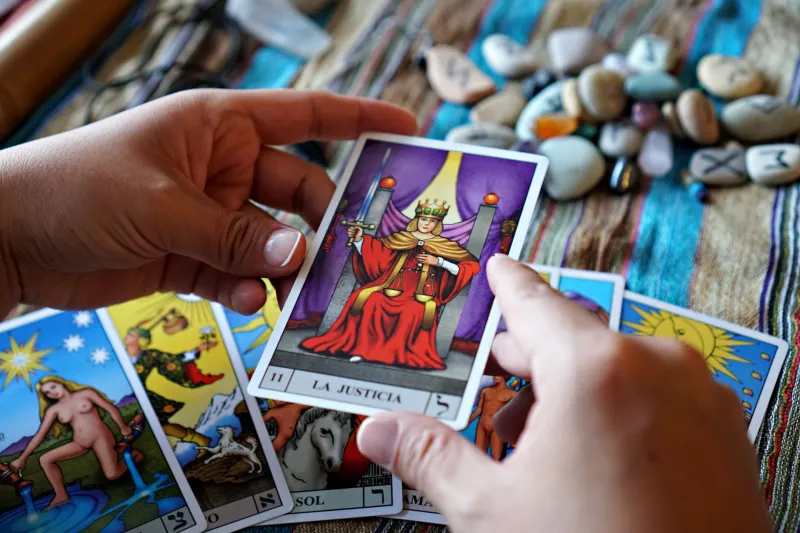
There's a particular kind of quiet that happens when Marisol Vega spreads her cards across a thrifted velvet cloth in her Portland apartment. No notification sound. No loading bar. No app asking for her date of birth, her location, her "intentions" — which is really just a polite way of asking for her data. She pulls a card, sits with it, and lets it mean whatever it needs to mean. For Marisol, that silence is the whole point.
"Every app I've ever used for anything spiritual just felt like it was selling me back to myself," she says. "Like it already knew what I was going to feel before I felt it."
She's not alone. Across the country, a loose, largely unorganized underground of young people — many of them in their early twenties, many of them deeply fluent in the language of tech — are gravitating toward physical tarot decks with a kind of urgency that goes beyond aesthetics or nostalgia. This isn't just cottagecore cosplay. It's a deliberate, sometimes fiercely articulate rejection of algorithmic certainty in favor of something genuinely unresolved.
The App Already Knows You're Sad
Digital divination has exploded in the last few years. Apps like Co-Star and The Pattern have tens of millions of users. TikTok's algorithm serves tarot content with eerie precision, often to people who didn't know they were looking for it. There are AI-powered card readers now, chatbots that will pull a "card of the day" and deliver a personalized interpretation based on your mood input and star sign.
And yet something about all of it feels hollow to a growing number of younger users — specifically the ones who've grown up watching their emotional states get monetized in real time.
"The algorithm already predicts what I'm going to feel," says Darius Cole, a 24-year-old from Chicago who started collecting vintage Rider-Waite decks after a bad breakup sent him down a rabbit hole of antique mall browsing. "If I open a tarot app and it tells me I'm feeling ungrounded and need to focus on self-care, that's not divination. That's just... behavioral targeting with better fonts."
The critique is pointed, and it's one you hear repeated in Discord servers, at zine fairs, in the comment sections of niche Letterboxd-adjacent tarot communities that have quietly colonized corners of the internet the algorithm hasn't fully indexed yet. These readers aren't anti-technology in the broad, reactionary sense. Most of them are chronically online. They just want one space — one practice — that doesn't feed the machine.
Thrift Store Theology
The deck itself matters enormously to this community. Not the pristine, shrink-wrapped 78-card sets sold at Urban Outfitters, but the ones with water damage on the Tower card and someone else's penciled notes in the margins. The ones that smell like the inside of a grandmother's jewelry box.
Thrifting tarot decks has become something of a spiritual act in its own right. There's a whole subculture around "inherited" decks — cards that carry the energy, the history, the literal fingerprints of previous readers. Etsy and Depop are full of listings for vintage Thoth decks, out-of-print Aquarian sets, handmade decks printed on cardstock and hand-cut by their creators. The imperfection is the feature.
"I have a deck I found at a Goodwill in Albuquerque for two dollars," says Simone Park, a 22-year-old art student in Philadelphia. "Half the cards have someone's handwriting on them. Little interpretations, little arguments with the traditional meanings. Reading with it feels like a conversation across time. No app can replicate that."
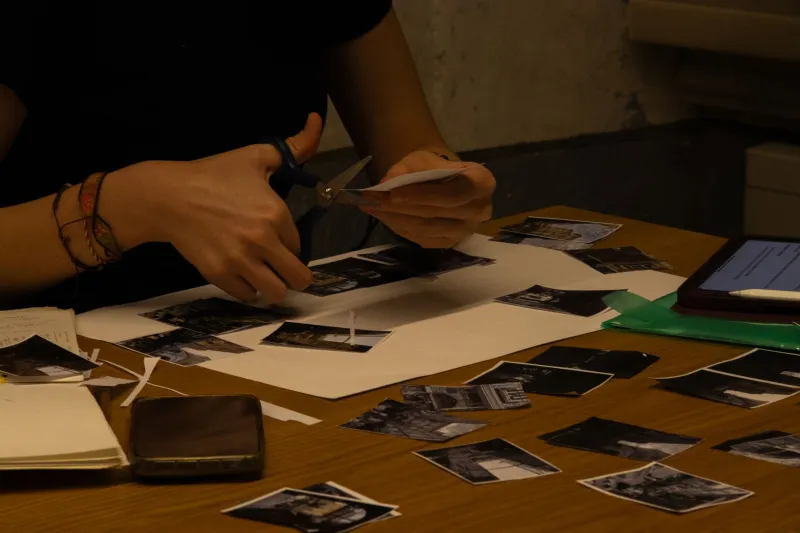
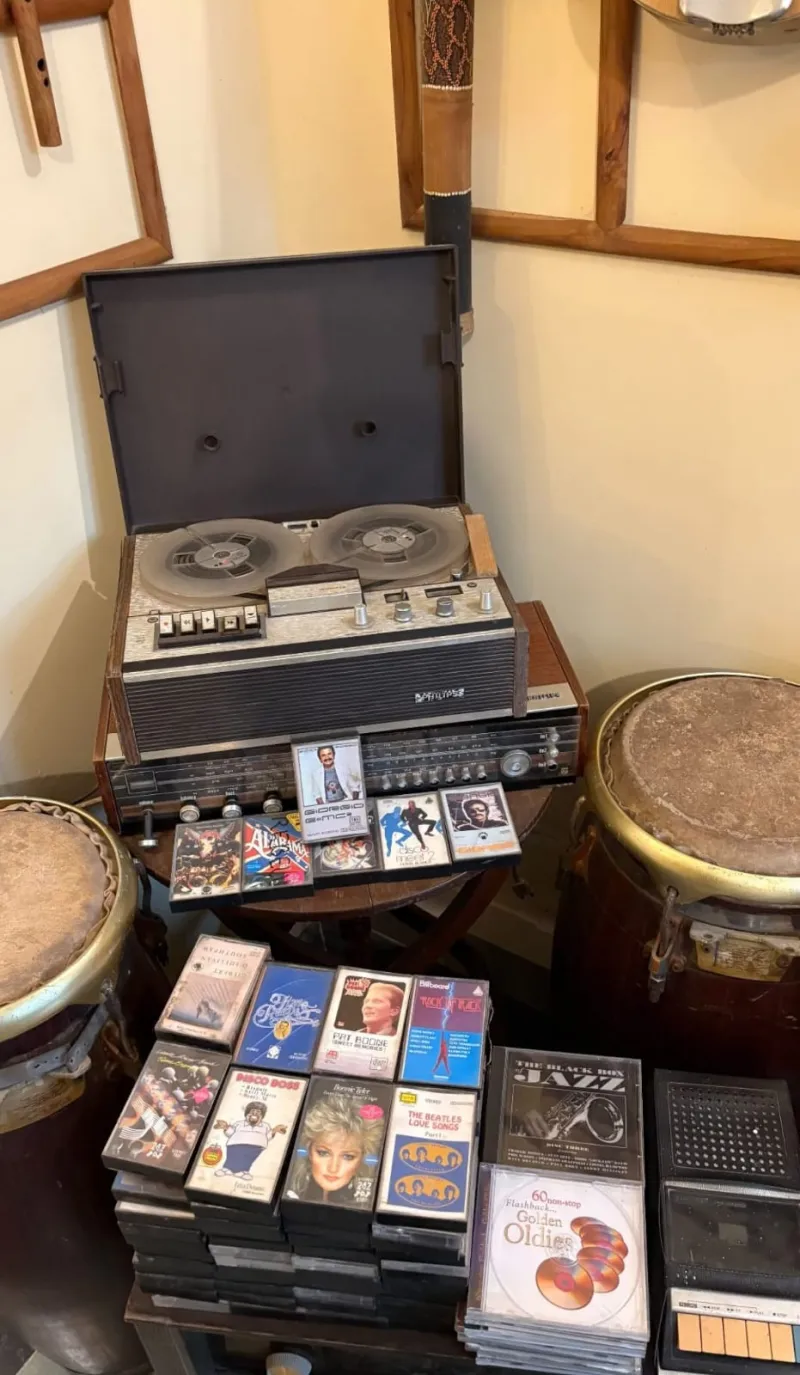
Some members of this community are going further, making their own decks entirely — hand-illustrated, photocopied, collaged from found images. The DIY ethic maps cleanly onto broader underground culture: the zine ethos, the cassette tape aesthetic, the general preference for things that couldn't exist at scale. A handmade tarot deck is, almost by definition, outside the content economy.
The Ritual as Resistance
What's striking about talking to people in this community is how consciously political the practice feels to them. Not political in a party-platform way, but political in the sense of reclaiming something — attention, interiority, the right to sit with uncertainty without immediately having it resolved by a notification.
In a cultural moment defined by the dopamine loop of the scroll, the tarot reading is almost aggressively slow. You have to physically handle the cards. You have to sit with an image that might not immediately make sense. You have to resist the urge to Google what the Five of Cups "really means" and instead let it mean something to you, right now, in your specific situation.
"The whole practice is basically a meditation on ambiguity," says Darius. "The cards don't tell you what to do. They just give you something to think with. And that's so different from every other tool I use, which is trying to reduce ambiguity, trying to predict, trying to optimize."
There's also something happening around community. Underground tarot circles — in-person reading groups, card swap meetups, small collaborative deck-making workshops — have been quietly proliferating in cities like Austin, Brooklyn, Detroit, and Los Angeles. These aren't the candlelit mysticism sessions of popular imagination. They're more like reading groups or record listening parties: casual, social, a little chaotic, organized around a shared interest in slowing down.
What the Cards Don't Know About You
Here's the thing that nobody in a tarot app's terms of service will ever tell you: the cards don't know anything about you. They can't. They're pieces of cardboard with pictures on them, shuffled by your own hands, interpreted by your own mind. That's not a bug for this community. That's the entire feature.
In an information ecosystem that runs on surveillance — on the premise that knowing more about you makes the product more valuable — there's something almost radical about a practice that operates from pure not-knowing. The tarot reader doesn't need your data. The spread doesn't update based on your engagement metrics. The Three of Swords doesn't care what you clicked on last Tuesday.
"I think what people are hungry for is something that can't be personalized," Simone says. "Everything is personalized now. Your feed, your recommendations, your ads, your news. It's all a mirror. Sometimes you want something that's just... itself. Something that doesn't already know you."
Maybe that's what the shuffle is really about. Not predicting the future, but insisting that the future hasn't been predicted yet. That it's still open. That the algorithm, for all its confidence, doesn't actually have the last word.
The cards don't know what's coming. And for a generation raised on the assumption that everything knowable has already been known, that uncertainty might be the most spiritual thing left.