Broadcasts Designed to Be Half-Heard: A Field Guide to Sleep Radio
There's a broadcast in the United States that reads the weather, on repeat, forever, in a flat synthesized monotone. It gives coordinates, marine forecasts, hazard warnings. It never addresses you. It never asks how your day went. It is, by design, the most ignorable signal on the dial — and thousands of people cannot fall asleep without it.
Welcome to sleep radio: the genre of broadcasting that succeeds by being barely noticed. What follows is a field guide to its species, and to the strange community of insomniacs, night-shift workers, and Gen Z drift-off streamers who hoard it.
1. The Weather Voice
NOAA Weather Radio is the gateway drug. A government service meant for emergency alerts, its continuous synthesized forecast loop has become an accidental national lullaby. The appeal is almost mathematical: the voice is rhythmic, the content repeats on a cycle you learn in your bones, and nothing in it is ever about you. Listeners describe the cadence — "seven hundred feet, barometric pressure two nine point nine five" — as a verbal weighted blanket. There are fan pages. There are remixes. The federal government accidentally made the most soothing broadcast in America.
2. Numbers Stations, Ambient Edition
We've covered numbers station hunters before — the shortwave oddities broadcasting coded strings of spoken digits to nobody. But a parallel fandom uses those same recordings as sleep aids. The interval signals, the eerie chimes, the woman reciting five-digit groups in German: to a signals enthusiast it's Cold War espionage; to an insomniac it's the sound of a world that keeps transmitting whether or not you're paying attention. Which is, arguably, the most comforting proposition there is.
3. Slow-Scan and Longform Ambient Broadcasts
A quieter tradition: radio stations and independent broadcasters who run hour-long ambient programs intended for the drowsy. Slow-drone compositions, long-form field recordings of rain on a highway, a single synthesizer chord held for eleven minutes. Some of this grew out of legitimate broadcast history — overnight programming blocks that filled dead air with minimal effort — and some is native to the internet, where 24/7 "lofi" streams have a radio-station ancestor most listeners never learned about.
4. Hypnotism Records and Sleep Sermons
The physical media wing of the genre. Mid-century hypnotism LPs — the kind sold in the back of magazines promising to cure smoking or shyness in your sleep — are now collector's items and, occasionally, functional sleep tools. Alongside them: recorded sermons meant for hospital radios, 1970s relaxation cassettes, guided-sleep reels digitized by archivists. The production values are often terrible. That's part of the charm. There's a warmth in a hissy tape telling you to relax your shoulders that no lossless sleep app can fake.
Why Static Beats the App
Here's where the investigation gets interesting. Sleep apps are, structurally, the same product — a voice, repetition, ambient tone. So why do people flee them for a government weather frequency?
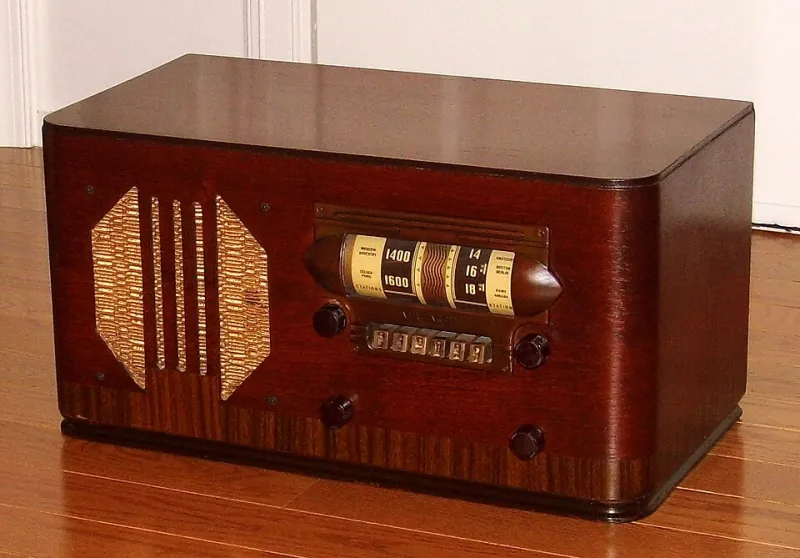
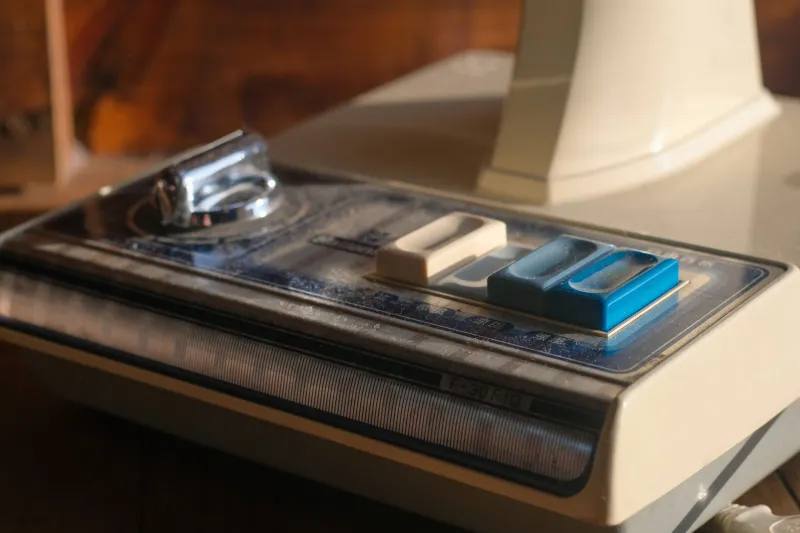
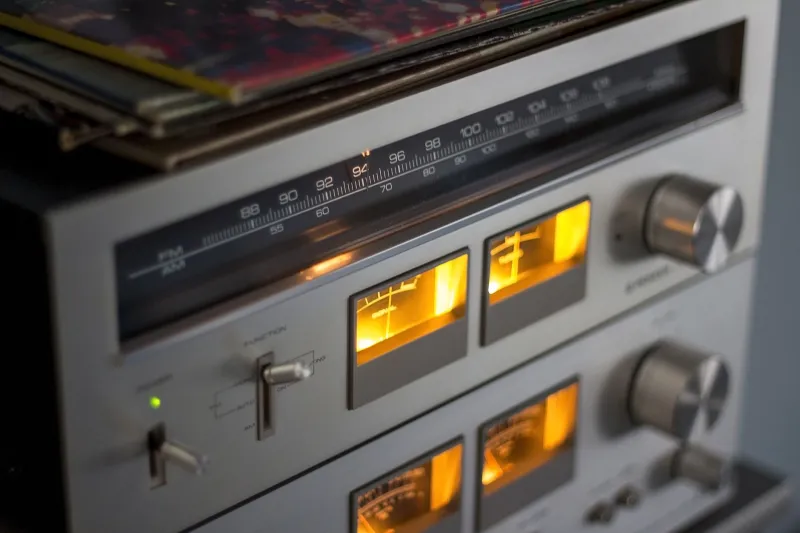
Three reasons surfaced again and again. First, the loop: apps cycle content, add new sessions, nudge you with notifications. Sleep radio just is. Nothing new will happen tonight. Second, the absence of commerce: nobody is upselling a premium tier at 3 a.m. through a NOAA receiver. Third, and most cited: the hardware. People like that the sound comes from a little radio with a dial, an object with no other purpose, no screen, no light. The device itself is off-duty from the attention economy.
One twenty-four-year-old who streams a slow-scan ambient channel nightly put it best: "My phone knows too much about me. The radio doesn't know anything. It's just talking to the room."
The Signal That Doesn't Need You
There's a thesis buried in all of this, and it's the same one underneath half the signals we chase at Fringe Signal: broadcasting designed to be half-heard might be the most honest form of media we have. No metrics, no engagement, no call to action. Just a voice in the static, keeping the night company, asking nothing back.
Sleep on that.