What the Transmitters Kept: The Secret Lives Buried Inside America's Dead Radio Stations
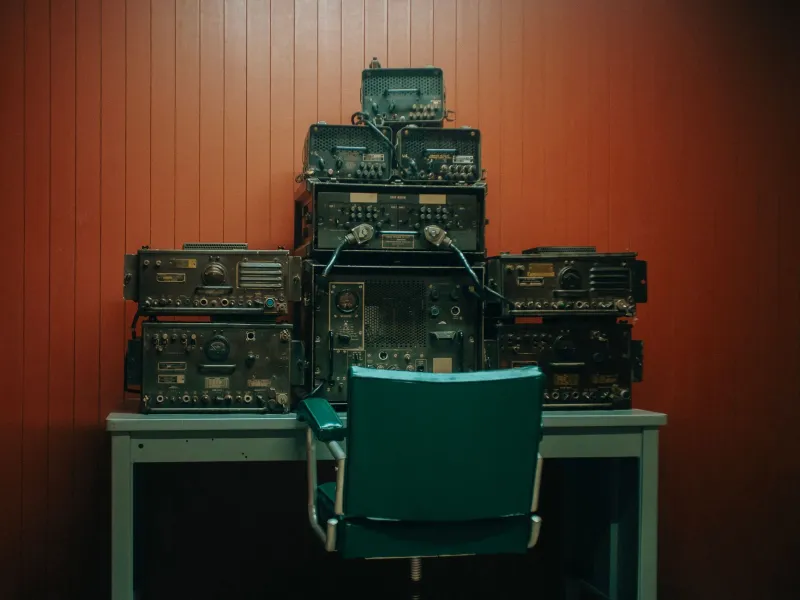
There's a particular kind of silence that settles inside a decommissioned transmitter building. Not the silence of a room that's been emptied—more like the silence of a room that's been holding its breath for forty years, waiting for someone to finally ask the right question.
Across the United States, a loose network of radio historians, salvage enthusiasts, and just plain curious people have been doing exactly that. They're cracking open the rusted housings of mid-century broadcast transmitters, pulling apart the guts of machines that once pushed signals across entire states, and finding something nobody expected: the interior lives of the people who ran them.
The Archaeology of the Airwaves
Most people think of a radio station as a studio—the microphone, the jingle, the DJ with the golden voice. But the transmitter site was something else entirely. Often located miles from the main station building, sometimes in genuinely remote terrain chosen for signal propagation rather than human convenience, transmitter stations were staffed by engineers who worked long overnight shifts alone. Their job was to keep the signal alive. To watch the meters. To log the readings. To exist, essentially, as a human failsafe inside a building full of equipment that could kill you if you touched the wrong thing.
What they left behind tells a different story than the official broadcast logs ever could.
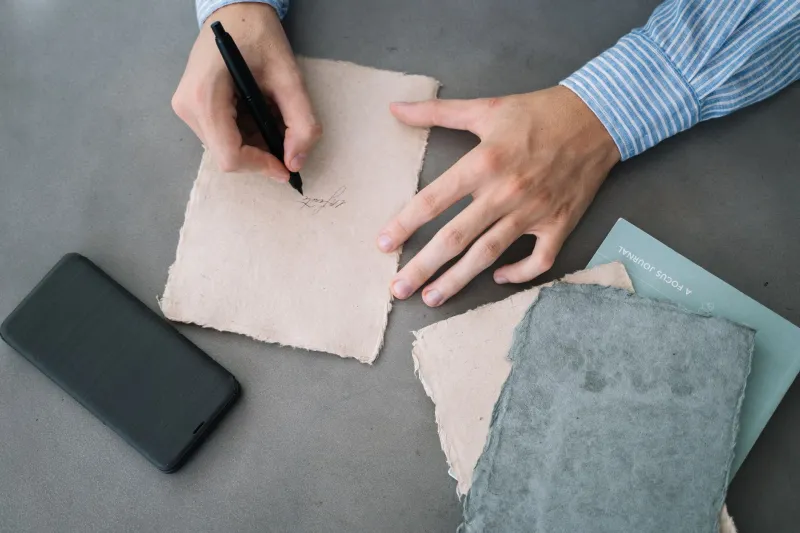
In a decommissioned AM station in rural Ohio, salvagers found a series of index cards rubber-banded together inside a transmitter housing. On one side: frequency readings, power levels, timestamps. On the other: fragments of what can only be described as correspondence. "She wrote back. I read it three times during the 2 a.m. check. The meters barely needed watching tonight." No name. No date beyond a day of the week. Just a man in a building full of humming metal, trying to hold onto something warm.
In west Texas, a photograph of a woman in a sundress was found laminated—actually laminated, like someone wanted to preserve it against the heat and the dust—and fixed to the inside of a cabinet door with electrical tape. The back read: "For the long nights. — M." The station had been off the air since 1987.
The Log as Literature
Broadcast engineers were required to keep detailed operational logs—FCC regulations demanded it. Frequency, power output, time, signature. The format was rigid, bureaucratic, almost militaristic in its precision. But somewhere in the gap between official requirement and human reality, a lot of these logs became something stranger.
Radio historian and independent archivist Deena Marsh, who has spent the better part of a decade photographing and cataloging artifacts from decommissioned stations across the Midwest and South, describes the phenomenon as "accidental autobiography."
"You'll be reading through a perfectly standard log," she explains, "and then there's this entry—still in the official format, still with the right timestamps—but the notes column just says something like, *'Couldn't stop thinking about the argument. Signal held steady. I did not.'" She pauses. "These guys were writing in the only format they had available to them. The log was the only paper they were supposed to be touching."
What emerges from these documents is a portrait of a particular American loneliness—not the dramatic, cinematic kind, but the quiet, fluorescent-lit variety. Men (and occasionally women, though female transmitter engineers were rare in the mid-century era) sitting with machines in the middle of nowhere, keeping the invisible signal alive while the rest of the country slept, or danced, or listened without ever thinking about who was on the other end of the wire.
Love in the Frequency Range
The love letters are the pieces that hit hardest. Not because they're especially eloquent—most of them aren't—but because of where they were found and what that placement implies.
A folded letter tucked inside the ventilation panel of a 1950s RCA transmitter in Mississippi. A stack of unsent notes discovered beneath a false floor panel in a Georgia station, still bound with a rubber band that crumbled to dust when touched. In Minnesota, a Valentine's Day card addressed to someone named "Ruthie," postmarked 1961, found inside the housing of a modulation transformer—never mailed, apparently, but kept somewhere close. Kept somewhere that mattered.
These weren't just objects someone forgot. They were objects someone placed. The transmitter building, for all its danger and isolation, was also a private space—one of the few places in mid-century American life where a working-class man could be genuinely alone with his thoughts for eight hours at a stretch. The machine became a kind of confessor. The cabinet housing became a reliquary.
What Gets Buried When the Signal Dies
There's something almost unbearably poignant about the timing of these discoveries. The stations that are being opened up now, the ones yielding these fragments, mostly went dark in the 1970s, '80s, and '90s—casualties of format changes, corporate consolidation, the slow death of local broadcasting as a meaningful economic proposition. The engineers who left these things behind are, in many cases, gone too. The people they loved, or longed for, or argued with in the small hours of a Tuesday morning—most of them are gone.
What's left is the object. The index card. The photograph behind the dial.
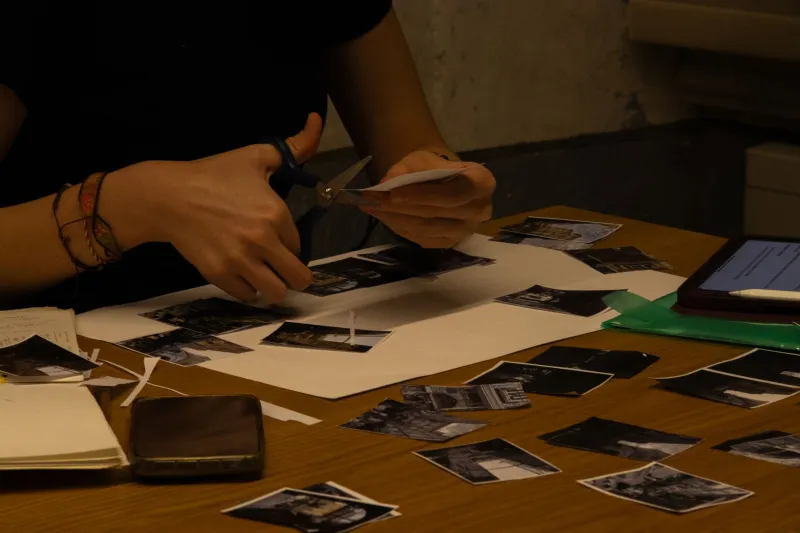
Deena Marsh keeps a running archive of what she calls "transmitter intimacies"—photographs of found objects, transcriptions of log entries that crossed the line from technical record into something more personal. She's been trying to find a home for the archive, some institution willing to take it seriously as a cultural document rather than just radio memorabilia. So far, no takers. "It doesn't fit the official story," she says. "The official story of American radio is about technology and entertainment and advertising. It's not about a guy in rural Ohio who was in love with someone and had nowhere to put that except inside a machine."
The Signal Carries More Than Sound
There's a reason this stuff resonates right now, in the particular cultural moment we're living through. We exist in an era of total documentation—every feeling immediately externalizable, every longing a potential post, every private moment one screenshot away from becoming public. The idea of someone carrying an emotion for years and finding no outlet for it except a folded piece of paper hidden inside a piece of industrial equipment feels almost alien. And also, somehow, deeply clarifying.
Those transmitter engineers were keeping the signal alive. They were the invisible infrastructure of a culture that mostly didn't think about them. And in the hours when nobody was watching, they were also just people—people who missed someone, or hoped for something, or needed to put their feelings somewhere physical and real.
The machines they tended are mostly gone now. The frequencies they maintained have been reallocated, repurposed, or simply abandoned. But the letters are still there, in the dark, behind the panels, waiting for someone to finally open the cabinet and ask what the transmitter kept.